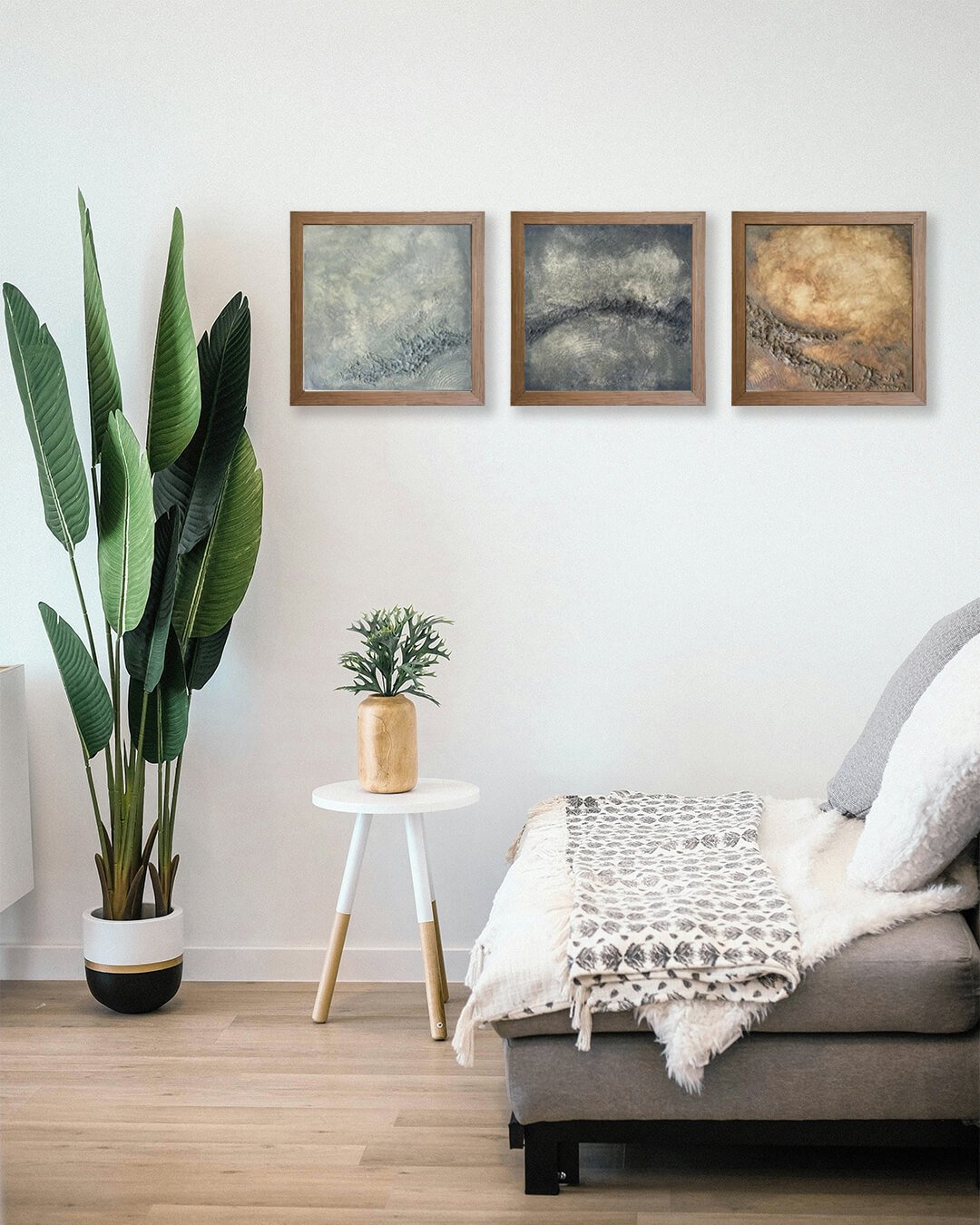
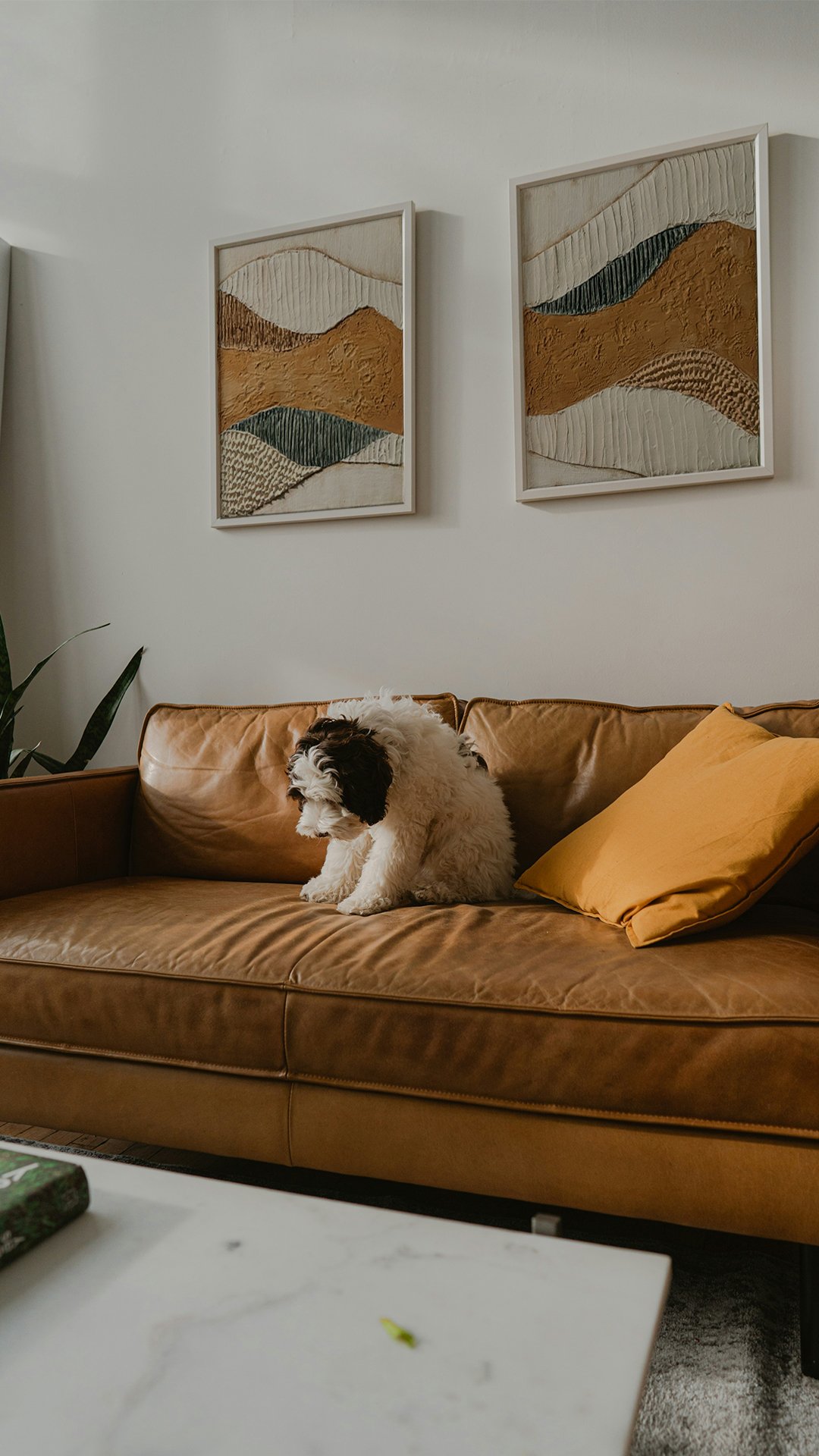
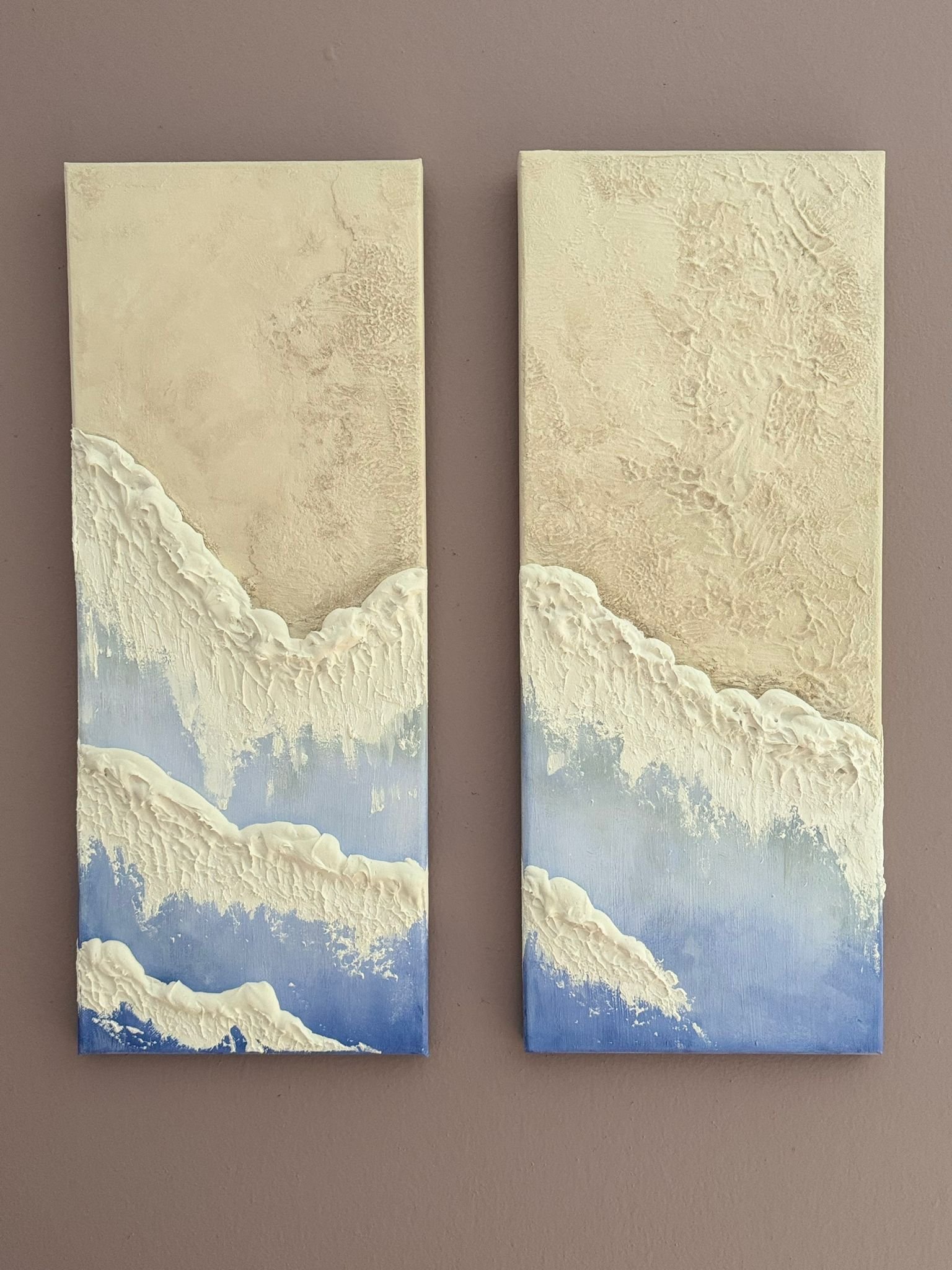
Lighting tips can completely change the way we experience artwork inside a home. The right lighting does much more than brighten a room. It reveals texture, highlights depth and dimension, enhances colors, and creates a stronger emotional connection to every piece on your wall.
When we work with textured wall art, lighting becomes even more important. A carefully selected light source can transform a flat-looking surface into something sculptural and immersive. It can bring out layered finishes, subtle shadows, and details that often disappear under poor lighting conditions.

Art and lighting have always worked together. Even the most beautiful wall art can lose its impact when the lighting environment is poorly planned.
The relationship between lighting and artwork is about visibility, but it is also about emotion. Lighting plays a major role in how we interpret color, depth, texture, and scale.
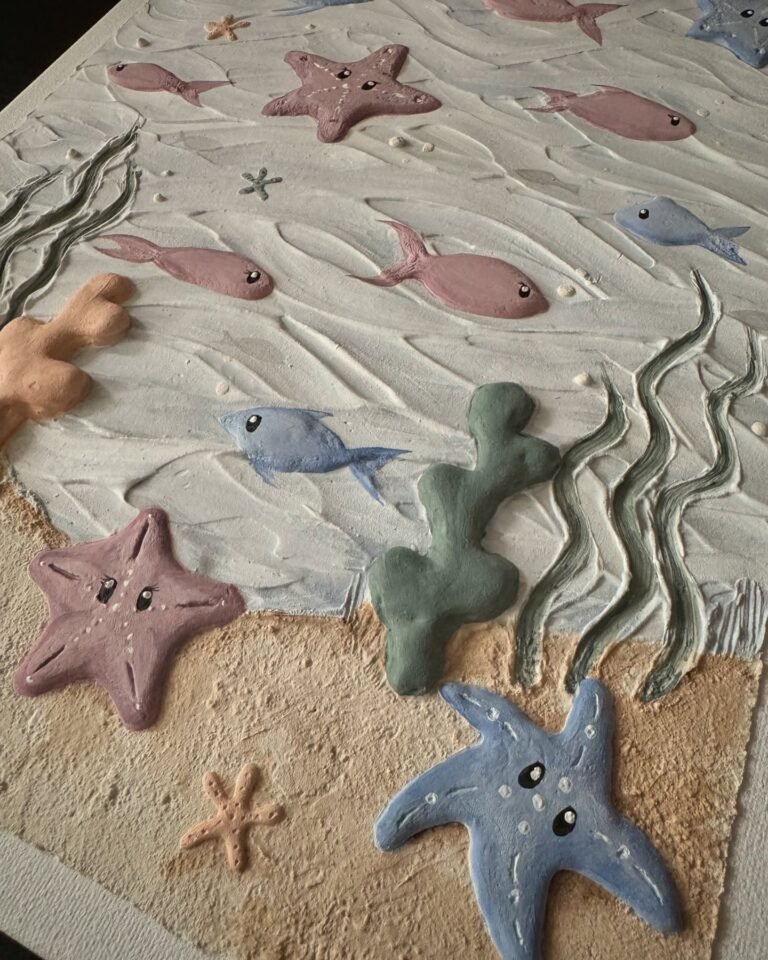
A highly textured abstract art piece can appear completely different depending on how the light hits the surface. Small ridges created with acrylic mediums or a palette knife can cast subtle shadows that add visual interest and depth.
This is why galleries and museums invest heavily in gallery lighting systems designed to showcase artwork as intended by the artist. Proper lighting helps create a dynamic viewing experience while protecting the work itself.
The best lighting usually combines high-quality LED lighting, careful positioning, and the correct color temperature.
Textured wall art benefits from directional lighting because it reveals sculptural details and layered textures.
Some of the best options include:
LED track lighting remains one of the most recommended systems for art display.
Its primary advantage of track lighting is flexibility. Fixtures can move, rotate, and adjust as your collection changes.
Professional track lighting allows homeowners to direct light precisely where it is needed without replacing the entire fixture system. Many art galleries use track lighting and adjustable recessed lighting because of this adaptability.
Adjustable recessed lighting offers a cleaner architectural look.
Many interior designers choose fixtures with adjustable beam angles to highlight a desired art piece while maintaining an uncluttered ceiling.
This approach works especially well in modern homes with minimalist architecture.
Picture lights create a more intimate atmosphere.
These fixtures are mounted directly above the artwork and direct light downward. They are especially popular with framed artwork, canvas art, and oil painting collections.
Color temperature has one of the biggest impacts on how artwork appears.
Color temperature is measured in Kelvin.
The measurement of a light source’s warmth or coolness directly influences mood, ambiance, and color perception.
| Kelvin | Appearance | Best Use |
|---|---|---|
| 2700K | Warm White | Cozy interiors |
| 3000K | Soft Warm White | Residential art display |
| 4000K | Neutral White | Galleries and museums |
| 5000K | Daylight White | Professional viewing |
For most textured wall art and modern interiors, 3000K offers the best balance between warmth and color accuracy.
For contemporary collections, photography, or gallery lighting applications, 4000K can provide a cleaner presentation.

CRI stands for Color Rendering Index.
This measurement evaluates a light source’s capacity to accurately reproduce colors compared to natural sunlight.
Sunlight has the highest CRI possible, which is 100.
When choosing LED lighting, we generally recommend a high color rendering index of at least 90.
Many professional galleries and museums aim for CRI 95 or higher because accurate color reproduction is essential when displaying fine artwork.
Low-CRI bulbs can make neutral tones appear dull and can flatten highly textured surfaces.
Yes.
Natural sunlight creates beautiful lighting conditions, but prolonged exposure can lead to fading.
UV exposure remains one of the biggest concerns in art conservation.
Certain pigments, textiles, and canvas materials are especially sensitive to UV radiation.
To reduce damage:
Modern LEDs emit significantly less heat and UV compared to traditional halogen systems.
This is where lighting becomes truly exciting.
Texture relies on shadow.
Without directional lighting, highly textured wall art can appear flat.
When light hits a textured surface from an angle, small ridges create highlights and shadows that reveal the composition.
This effect is particularly noticeable with:
The intersection of lighting and texture creates visual and emotional depth that cannot be achieved through color alone.
This is one reason textured artworks continue gaining popularity in design-forward interiors.
Read: Why Textured Wall Art Is Replacing Flat Canvas in 2026

Living rooms often benefit from layered lighting.
Combine:
This creates a balanced lighting environment while allowing artwork to remain the focal point.
A home office requires a different approach.
Avoid excessive glare from screens.
Directional LED track lighting can illuminate artwork without creating distractions.
Textured canvas wall art often adds personality and visual appeal without overwhelming a workspace.
Hallways are perfect for gallery-style displays.
Wall art panels, canvas paintings, and grouped collections can benefit from evenly spaced spotlights.
Creating a residential gallery feel is easier than most people think.
Choose one artwork that deserves attention.
A large-scale textured canvas or oversized abstract wall art can establish the visual anchor.
Consider:
Choose LED lighting with:
Glare can distract from artwork.
Adjust beam angles carefully.
Many galleries use adjustable fixtures with precise optics to minimize reflections.
Mix:
This creates a seamless and sophisticated atmosphere.
Even beautiful artwork can suffer from poor lighting decisions.
Common mistakes include:
Cheap LEDs often have poor CRI values and inaccurate color rendering.
Too much intensity of light can create harsh shadows and visual fatigue.
Heat and UV remain major contributors to fading.
Improper directing light can create hotspots or uneven illumination.
A consistent lighting strategy creates better visual cohesion.
Learn about DIY Texture Paint: Add Depth to Canvas & Walls With Texture Techniques
Lighting affects how a room feels.
Warm color temperatures often create a calm, welcoming ambiance.
Cooler temperatures can feel more energetic and gallery-like.
The language of light influences emotional perception just as strongly as furniture or color palettes.
When lighting is thoughtfully designed, artwork becomes part of the overall atmosphere rather than a separate decorative element.
This approach helps enhance the visual experience while creating a stronger connection between architecture, décor, and art.
CRI 90+ is recommended. Professional galleries often use CRI 95 to 97 for maximum color accuracy.
Yes. Modern LEDs produce minimal heat and UV exposure, making them one of the safest options.
For most homes, 3000K works beautifully. Museums often use 4000K for neutral presentation.
Absolutely. LED track lighting offers excellent flexibility and can reveal texture more effectively than diffuse lighting.
Yes. Direct sunlight can lead to fading over time. UV protection is strongly recommended.





Sign up to grab 10% off your first order and be the first to hear about new drops and exclusive deals!