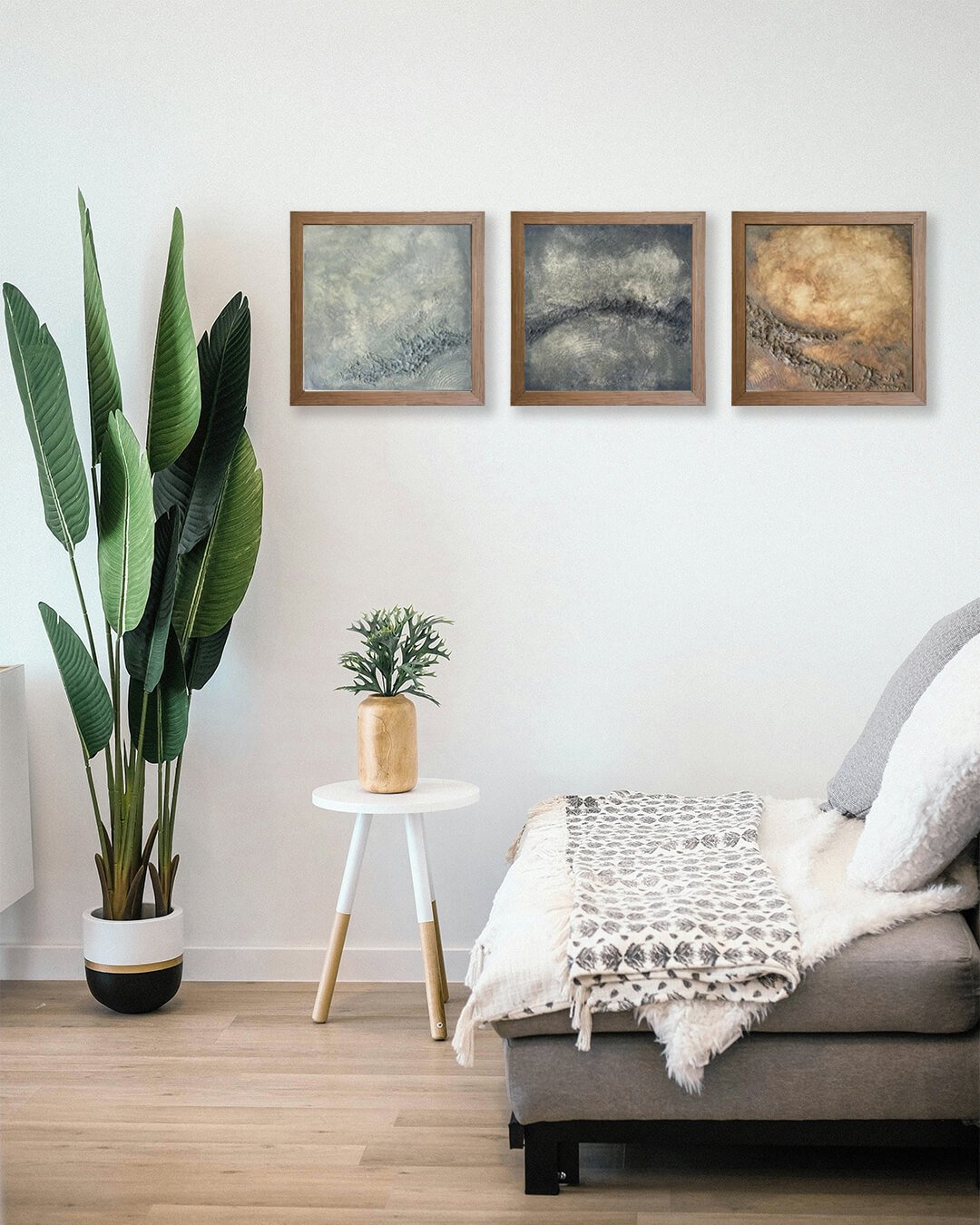
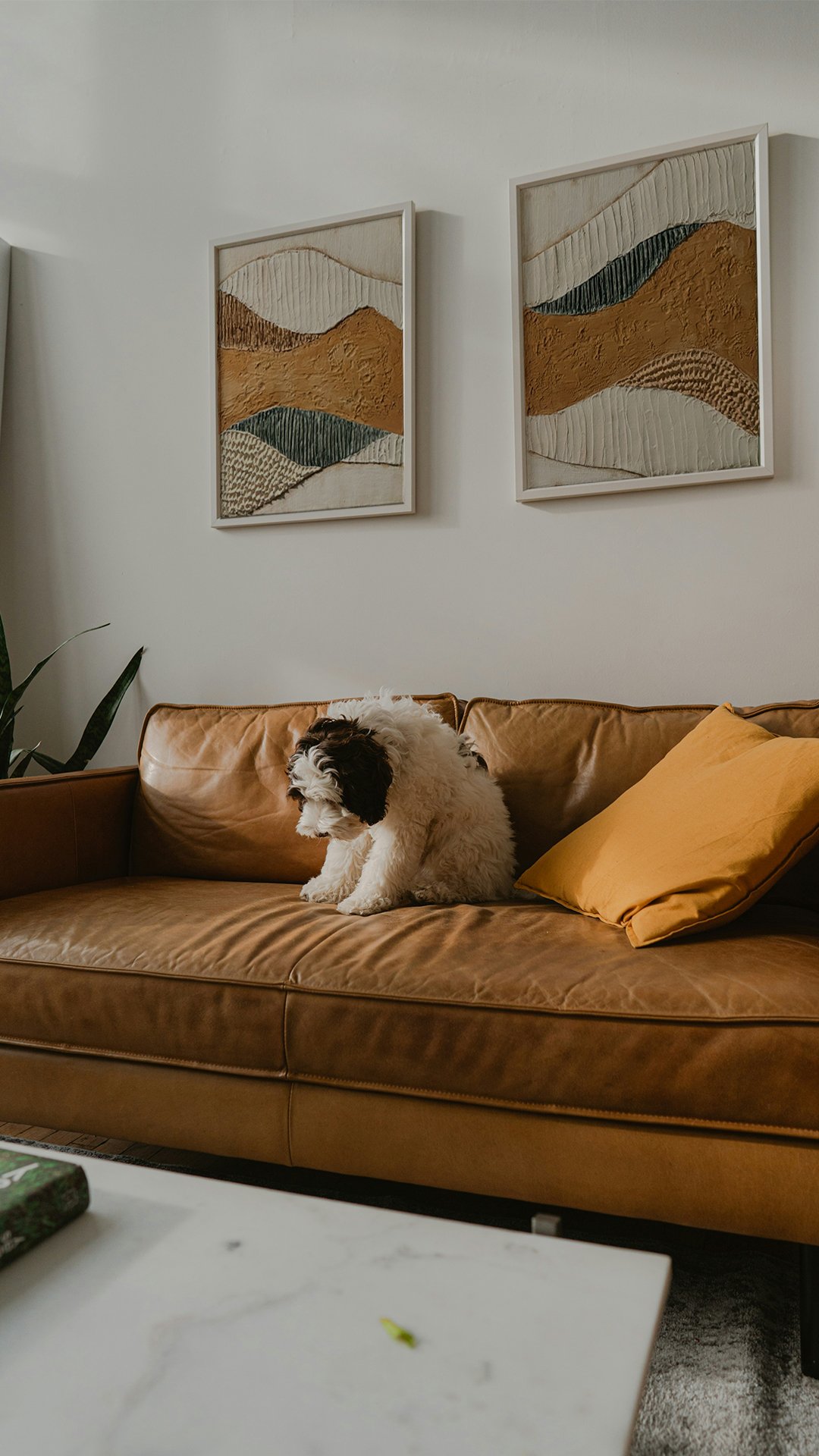
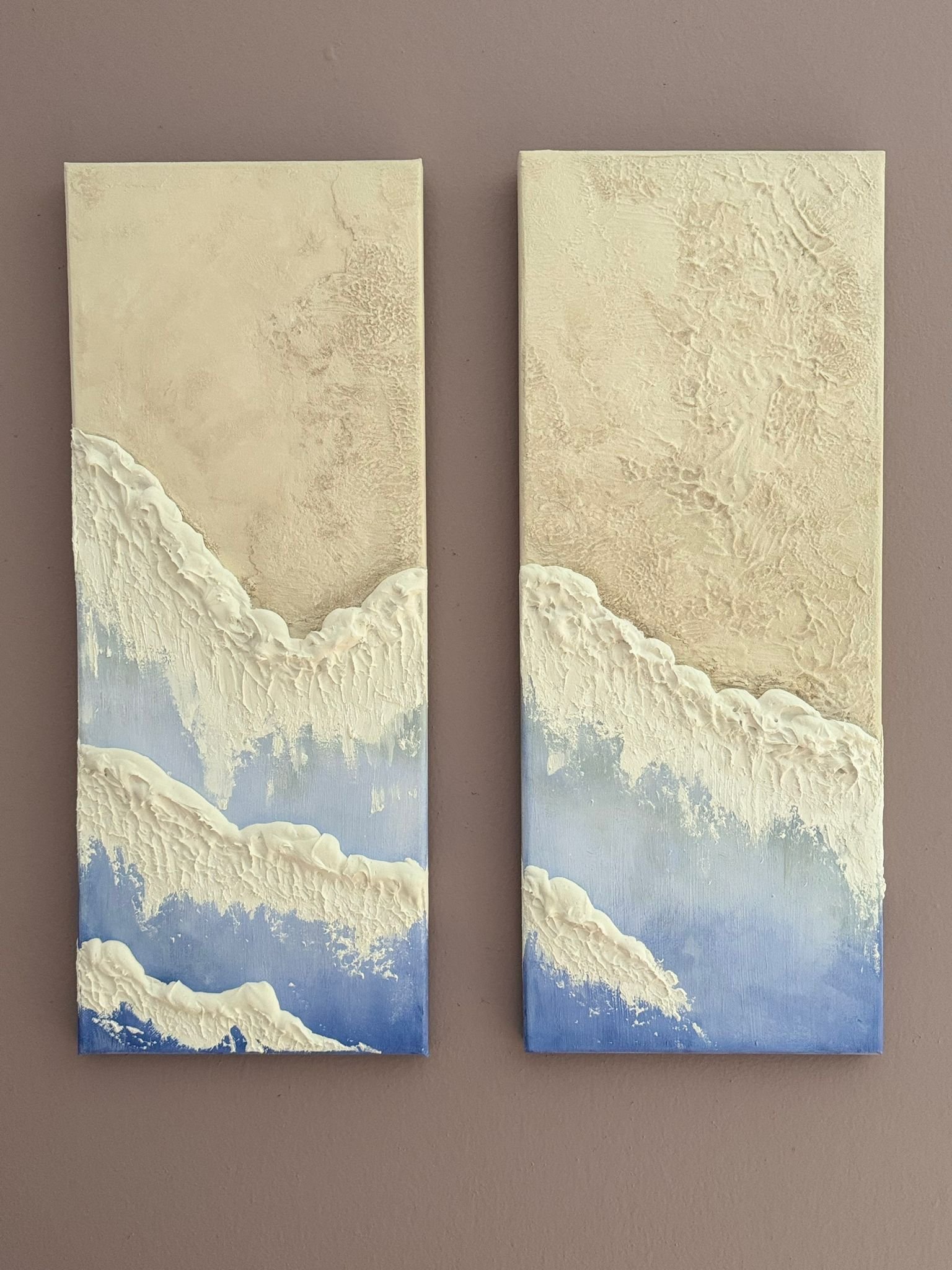
Depth and dimension in interior design are what separate a room that looks styled from one that actually feels luxurious. Luxury interior design in 2026 is no longer defined by expensive materials alone – it is defined by the thoughtful layering of textures, surfaces, and tactile elements that work together to create a space that feels genuinely rich, warm, and considered. This post covers exactly how that works, from the walls to the floor, and what you need to understand to create it in your own home.
Key Points / Quick Summary
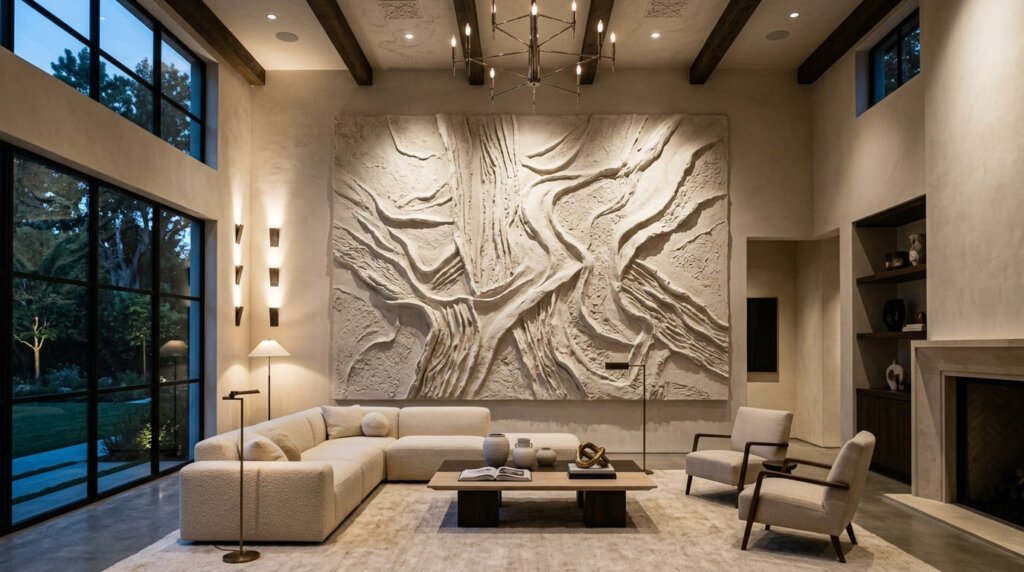
In practical terms, depth and dimension in an interior space describe the quality of visual and sensory richness that comes from a room having multiple distinct surface qualities, material types, and light-catching elements working together. A room with only smooth, uniform surfaces has no depth. A room with flat walls, synthetic textiles, and no variation in surface quality feels two-dimensional regardless of how much money was spent on the furniture.
Depth and warmth, by contrast, emerge when different materials interact. The Chaos Design Blog puts this well in their 2026 trend analysis: the key lies in textural contrast – pairing tactile bouclé and woven fabrics with sleek marble or smooth plaster creates a rich sensory experience that ensures monochromatic spaces feel cozy and elevated. That contrast is the mechanism. Without it, even expensive rooms can feel flat and impersonal.
The 2026 interior design conversation has clarified this point directly. Lehner Designs’ trend analysis states that this year is defined by depth, dimension, authenticity, and sensory connection – designers are embracing layered, warm earthy palettes and materials with a story, building homes that reflect the people who live in them rather than following generic formulas. The sensory dimension is key: depth is not just visual. A room that creates a sense of intimacy has physical presence. You feel the room before you consciously think about it.
Texture plays a crucial role in luxury design because it engages the senses beyond vision. A room can be beautiful from a photograph but feel hollow in person if there is no physical surface variation. Texture brings a room to life in a way that color alone cannot. It adds warmth and character that remains felt even when you cannot articulate exactly why a space feels as good as it does.
Designer Johanna Constantinou, cited in both Sierra Living Concepts’ and Home Designs AI’s 2026 trend reports, identifies texture as the new luxury: where previous years relied on color contrast and bold patterns to create visual interest, 2026 interiors achieve depth through tactile layering – and the key difference is that texture is no longer just an accent but the foundation of how rooms are designed. That shift is significant. It means the quality of the surfaces in your room matters more than the color choices or the brand of the furniture.
Texture plays a significant role in how a room registers emotionally as well. High-value clients are rejecting surfaces that only look authentic – they want materials that genuinely feel like what they appear to be, because that authenticity creates a sense of luxury that is felt rather than just seen. The physical reality of a surface – the roughness of real plaster, the weight of a wool rug, the genuine depth of a handcrafted canvas – communicates quality in a way that printed or simulated finishes cannot.
Read: 2026 Wall Art Trends: Transform Your Space with Texture & New Art Styles
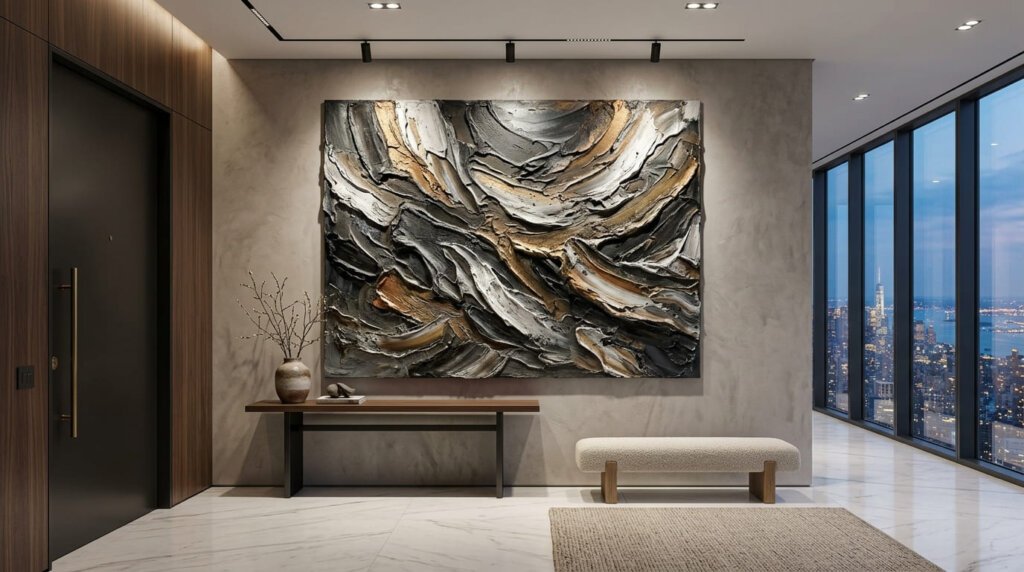
Layering textures in interior design is the practice of introducing multiple materials with different surface qualities throughout a room, so that the space has visual richness at every level. The concept is not complicated, but doing it well requires thinking about the room as a whole composition rather than a collection of individual pieces.
Fratantoni Interior Designers describe luxury interior design in 2026 as fundamentally about curation, refinement, and thoughtful restraint – in 2026, luxury is not about what is added, but about what is curated, refined, and designed with purpose. That is the mental model for layering: not more, but better. Not covering every surface, but choosing every surface with intention.
The art of layering in interior design involves working across three spatial levels: the floor, the walls, and the furniture and soft furnishing layer in between. Each level contributes something to the overall texture story of the room. None of them works in isolation.
At the floor level, a woven jute rug introduces natural fiber texture and organic variation underfoot. Above it, the sofa and chairs carry the upholstery layer – a plush bouclé, a linen weave, a cushion in a contrasting fabric. These middle-level elements are what people physically interact with most, and their tactile quality is what makes the room feel good to spend time in.
The wall layer is where the room’s visual depth is established or lost. A flat wall with a single flat print does nothing for the depth of a room. A textured wall treatment – whether that is limewash plaster, paneling, or a handcrafted canvas art piece with genuine surface relief – creates the backdrop that gives all the other layers their context.
Material now holds visual power equal to form. An emerald velvet sofa or a substantial textured ottoman can anchor an entire room – and the clients who understand this are choosing tactile, timeless fabrics and surfaces that age gracefully. This is layering done with intention.
This is the question most people have when they start thinking about introducing texture to their home. The answer is: the key is to mix materials that contrast without competing, and to do so within a tight color palette.
Here is the principle: texture variety works when color variety is controlled. If you introduce five different textures but hold the palette to three closely related warm neutrals, the room will feel rich rather than chaotic. If you introduce three textures but each one is a different color, the visual noise outweighs the sensory richness.
Introducing texture without overwhelming a space also means thinking about visual weight. A heavily textured rug with a deeply textured accent wall and a sculptural sofa in a small room will feel claustrophobic. The same elements in a larger room with generous negative space between them will feel luxurious. The rule is not which textures to avoid – it is how much breathing room each one needs.
For most rooms, the practical approach is: one dominant texture (usually the floor or the main wall treatment), one medium-weight accent texture (the sofa or primary seating), and several supporting textures that add dimension without demanding attention. A cushion in a contrasting weave, a rattan object on a shelf, a textured canvas piece on the wall. Each one contributes to the overall design narrative without making a statement that competes with the others.
Learn about Wall Art Size Guide: Choose the Right Art Size for Your Space
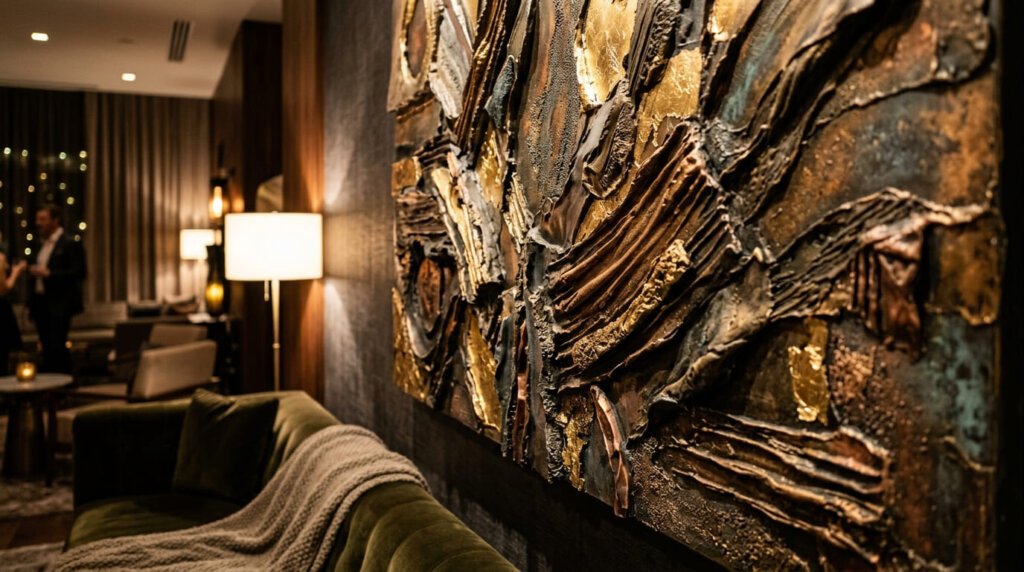
Not all materials create depth equally. Some add warmth and character by their nature – their organic variation of nature inspired artwork, their light-catching quality, their physical weight. Others look appropriate but contribute nothing to the sensory experience of the room. Here is how to distinguish between them.
Plaster and lime finishes. These are among the most powerful wall treatments for creating depth in a room. Azula Designs describes lime plaster specifically as having a matte, chalky depth that reacts to sunlight throughout the day – looking like a soft velvet grey in the morning and catching warm golden tones by sunset. That responsiveness is what gives plaster its architectural quality. It is not a static surface.
Wool and plush textile. A heavy wool rug adds visual weight to a room at the floor level. Bouclé and plush woven upholstery on a sofa or accent chair brings the warm, tactile quality to the mid-level layer. These materials age well and develop character over time rather than looking worn.
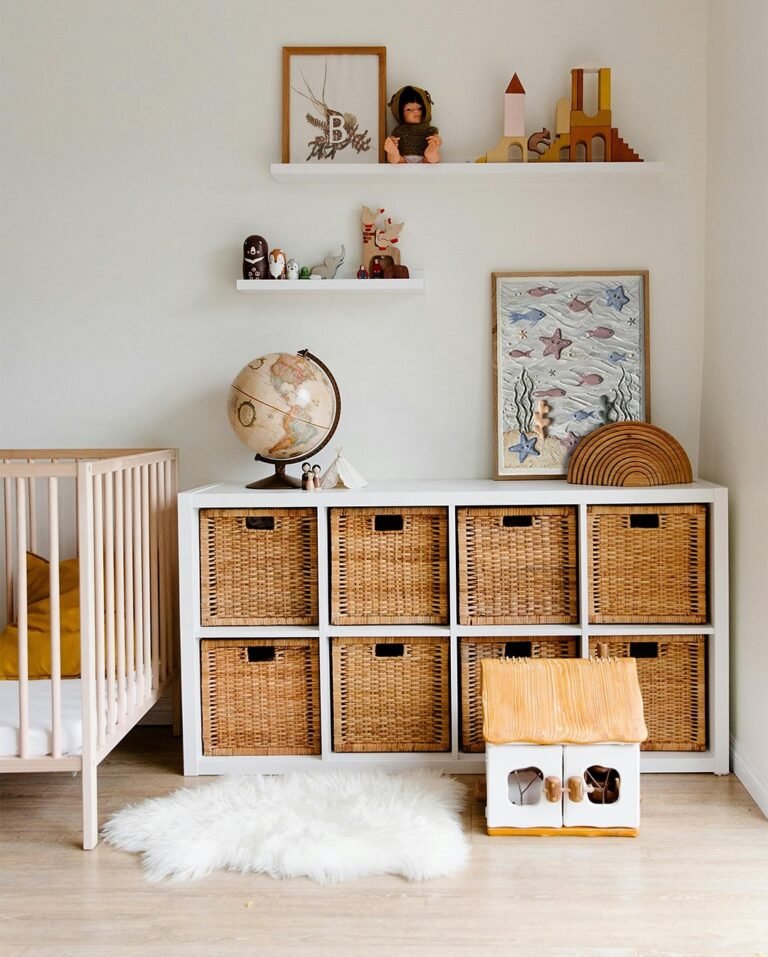
Rattan and natural fiber. Rattan furniture, woven baskets, and natural fiber accents add an organic dimension that mass-produced materials cannot replicate. The woven structure is visible and physical – it contributes texture that reads clearly even from across the room.
Linen. Linen soft furnishings – curtains, cushion covers, bed covers – add a fabric quality that is both understated and genuinely tactile. The slight irregularity of linen weave contributes to the layered feel of a room without calling attention to itself.
Glossy and matte contrast. One of the most effective ways to add depth and dimension to an interior is to use materials that contrast in finish quality as well as surface texture. A glossy ceramic piece next to a matte plaster surface, or a polished stone element next to raw linen, creates the kind of visual balance that makes each material look more considered than it would in isolation.
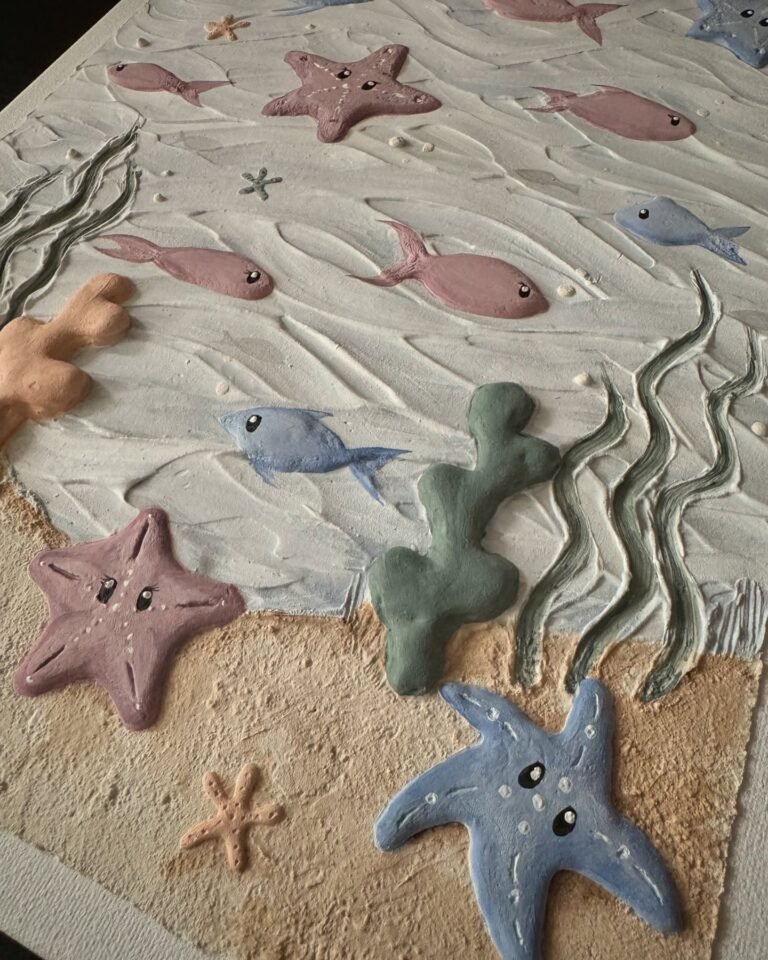
Handcrafted textured art. A plaster-based canvas piece with genuine surface relief operates at the wall level – the highest-leverage surface in any room. It adds depth and dimension that wall paint and flat prints cannot, and because it catches light at different angles throughout the day, it contributes to the room’s sensory experience continuously rather than just visually.
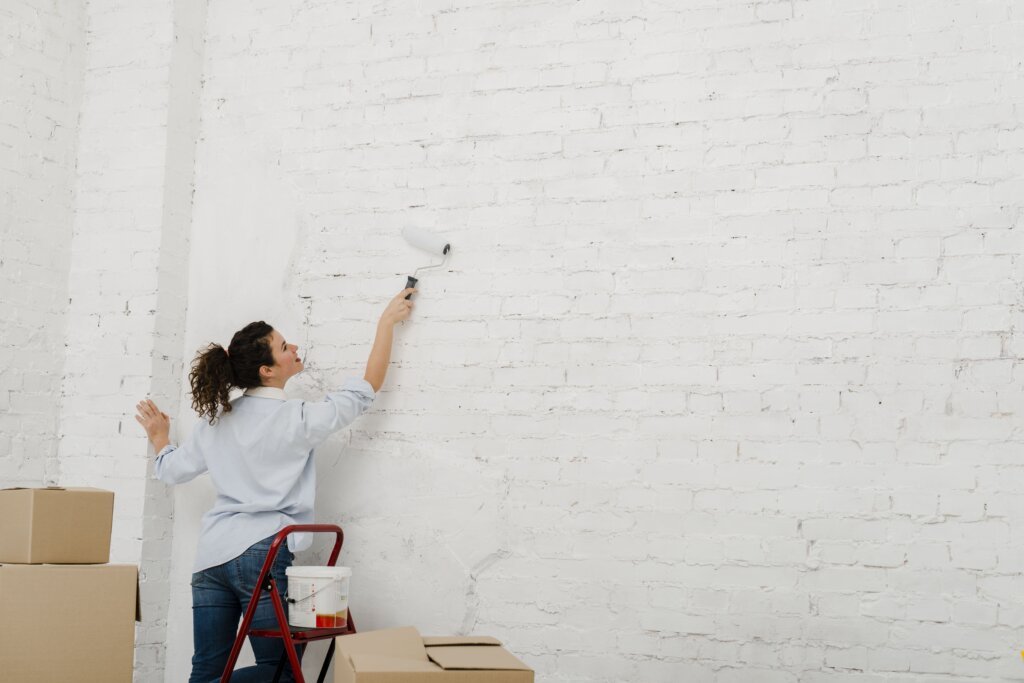
The walls of a room are its largest uninterrupted surfaces, and they have more influence on the room’s depth and dimension than any other single element. What you choose to do with your walls determines whether the room’s other layers have a context to work within or whether they exist in a vacuum.
Texture in interior design has always been applied to walls – through plasterwork, paneling, textile wallcoverings, and art. What is different in 2026 is that the wall surface itself is being treated as a design element rather than a backdrop. Even a plaster wall behaves differently across seasons – warm in winter, luminous in spring – and this dynamic quality is what separates living materials from static painted finishes. A wall that changes with the light is a wall that creates an experience rather than just defining a boundary.
Textured wallpapers and plaster wall finishes are effective, but they require renovation and commitment. Textured wall artwork gives you the same depth-creating quality in a form that can be placed on any wall without any permanent alteration.
Here is how it works mechanically: a handcrafted canvas with real surface relief – plaster ridges, impasto marks, layered material – creates a focal point that has genuine physical dimension. Light falls across the surface at different angles throughout the day, creating depth of a room quality that no flat print can replicate. The artwork creates visual interest that draws the eye and provides the contrast layer the room needs to feel complete.
One of the most effective ways to introduce depth without architectural work is a single large-scale handcrafted canvas piece placed on the primary wall – the wall that faces the main seating, or the wall visible from the entrance. It creates a focal point around which the room’s other texture layers organize, and it does so without requiring any furniture changes, flooring work, or painting.
The practical advantage of textured wall art over wall treatments is flexibility. You can curate your space incrementally – starting with one strong piece and building the room’s texture story around it – rather than committing to a full wall treatment that requires plastering, wallpaper hanging, or paneling work.
Our Textured Wall Art Collection includes handcrafted plaster canvases in warm neutral and earthy palettes designed for exactly this purpose – pieces that create the depth and dimension of a luxury interior without requiring renovation.
This is the practical sequence. Each step builds on what came before, and doing them in order makes the difference between a room that accumulates texture and one that curates it.
Step 1: Identify the room’s current texture inventory Walk through the room and note every surface and material quality: wall finish, floor material, sofa upholstery, rug, window treatment, decorative objects. Are the surfaces predominantly smooth and uniform? Are there any tactile elements already present? This inventory tells you what the room already has and what it is missing.
Step 2: Decide on the primary texture level – floor or wall The most impactful change you can make is usually either a floor-level or wall-level addition. A new rug or wall art piece will do more for the room’s depth than ten small accessories. Choose one primary level to address first.
Step 3: Select the anchor texture element If you choose the wall level: select one large-scale handcrafted textured canvas in a palette that complements the room’s existing tones. If you choose the floor level: select a natural fiber rug – jute, wool, or woven cotton – in a color that grounds the room.
Step 4: Create contrast with a secondary texture Once the anchor is in place, introduce a secondary texture that contrasts with it in surface quality. A smooth, glossy ceramic object next to a matte plaster canvas. A plush sofa cushion against a rough-woven rattan bookshelf. The contrast is what creates the depth and visual balance that makes the room feel considered.
Step 5: Layer supporting textures at the soft furnishing level Add a linen throw on the sofa, a textured cushion on the accent chair, a woven runner on the dining table. These supporting textures do not need to be prominent – they build the layered look by contributing at multiple levels without making a statement.
Step 6: Edit ruthlessly Creating depth does not mean adding everything. After each addition, stand back and assess whether the room feels richer or just fuller. Every element should be contributing something to the overall design — warmth, visual weight, contrast, or surface variation. Anything that does not contribute a distinct quality to the composition should be removed.
Step 7: Review the lighting Texture without the right light is half an effect. Position at least one light source so that it angles across the most textural surface in the room – usually the wall art piece. Angled light creates the shadow variation that reveals the depth of physical texture. Flat overhead light flattens everything.
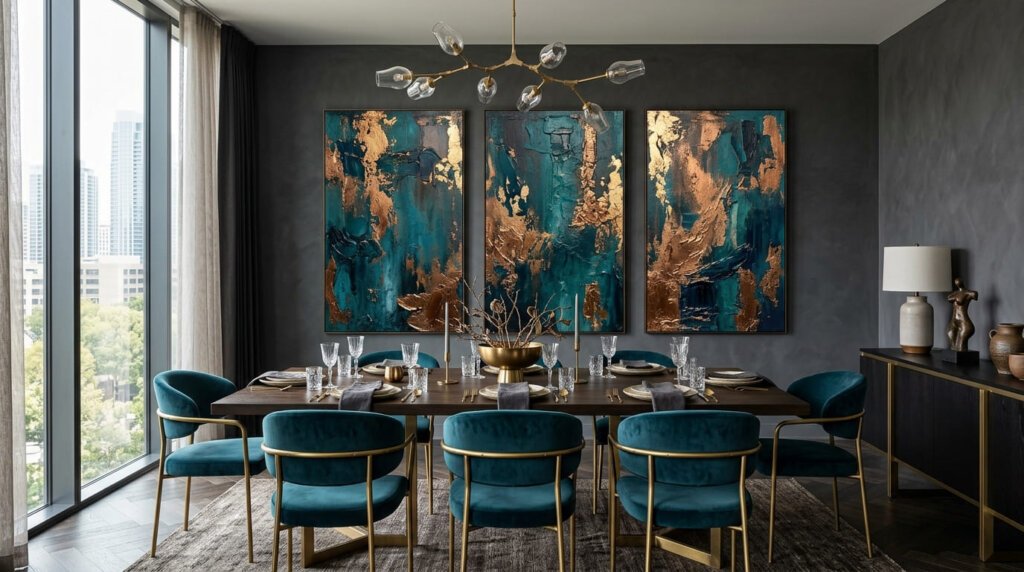
The living room benefits most from the full layering approach because it has the most surfaces to work with and it is the room where the overall design narrative is most visible to everyone who enters.
Start with the wall behind or above the main sofa. This is the most-viewed surface in a living room and the highest-leverage place for a textured element. A large handcrafted canvas in a warm neutral palette creates the room’s focal point and sets the tonal story that everything else follows.
At the floor level, a jute or wool rug anchors the seating arrangement and adds natural texture underfoot. On the sofa and chairs, introduce a plush cushion in a fabric that contrasts with the upholstery – a boucle cushion on a linen sofa, a woven cotton cushion on a smooth synthetic. A rattan accent piece on a side table or shelf adds the organic, natural-fiber element that connects the room to the material vocabulary of natural design.
The key is to make it feel: each material contributes something to the room’s sensory story without duplicating what another element is already doing.
In a bedroom, depth and dimension serve a different purpose. The goal is serenity and intimacy rather than the visual richness appropriate for a living room. The layering here is quieter, more restrained, and focused on the materials people interact with physically.
A plush rug beside the bed adds warmth and tactile quality underfoot first thing in the morning. Linen bedding introduces a fabric texture that is both visual and physical – the slight irregularity of linen weave contributes to the room’s organic quality. One thoughtfully chosen canvas piece above the headboard – in pale, muted tones with a quiet, organic surface – creates the wall dimension without disrupting the room’s calm.
The bedroom benefits from introducing subtle texture at every touchpoint – the cushion on the chair in the corner, the woven basket on the shelf, the linen curtain filtering the morning light. Each element contributes to the sensory experience of the room without demanding visual attention. The room feel here is not rich and layered in the way a living room might be – it is calm, intimate, and deeply physical.
These are the practical details that separate a well-layered room from one that simply has a lot in it.
Hold the palette tight. The most important rule in layering is that color variety and texture variety are in inverse relationship. The more textural variety you introduce, the tighter the color palette needs to be. Two or three warm neutrals – cream, sand, warm gray, soft ochre – as the dominant palette allows five or six different textures to coexist without visual noise.
Make each element earn its place. Every piece in a well-layered room contributes something specific: the rug adds weight and natural fiber; the canvas adds depth and wall dimension; the cushion adds plush tactile contrast; the rattan object adds organic structure. If an element is not contributing something distinct, it is adding clutter rather than depth.
Use the accent piece deliberately. An accent is not a filler. In a room with a clear primary texture story, one well-chosen accent in a contrasting material – a glossy ceramic, a sculptural object in natural stone, a piece of woven textile – adds the detail that makes the room feel curated rather than assembled. One accent, thoughtfully placed, is worth more than ten generic objects.
Introduce subtle variation at the wall level. Wall treatments and textured art are the most impactful ways to introduce depth because they operate on the largest surface in the room. Even a single textured canvas piece on the primary wall creates a layered space quality that the room cannot achieve from floor-level and furniture-level changes alone.
Specialize in creating one strong layer before adding the next. The most effective approach is not to address every layer simultaneously. Curate the wall layer first. Then the floor layer. Then the furniture and soft furnishings. Working one layer at a time ensures each element has been chosen in relation to what was already there rather than in isolation.
Texture without color is one of the most sophisticated approaches. A room in which all the materials are within the same warm neutral palette but each has a distinctly different surface quality – smooth plaster, rough linen, dense wool, organic rattan, polished ceramic – creates the maximum textural richness with the minimum visual noise. This is the design direction that creates interiors that feel genuinely luxurious to be in, not just to look at.
Q: What is the easiest way to add depth and dimension to a room without renovation?
A: Textured wall art is the most accessible starting point. A single handcrafted canvas piece on the primary wall – one with real surface relief rather than a flat print – immediately adds the depth of a room quality that renovation would otherwise require. It is the highest-leverage change you can make to a room without touching the walls permanently.
Q: Is texture in interior design the same as using pattern?
A: No, and the distinction matters. Pattern creates visual interest through repetition of design elements across a flat surface. Texture creates visual interest – and more importantly, tactile engagement – through actual physical surface variation. Texture plays a different role from pattern: it changes with the light, engages the sense of touch (or strongly implies it), and creates depth that pattern cannot replicate.
Q: How many textures are too many in a single room?
A: There is no fixed number, but the principle is: the variety of textures should be proportional to the room’s size and the tightness of the color palette. In a large living room with a tight neutral palette, six or seven distinct surface qualities can coexist harmoniously. In a small room with a looser color story, three or four is a safer range. The test is always visual balance: does the room feel rich, or does it feel busy?
Q: Can you create depth in a minimalist interior?
A: Yes, and minimalist interiors are actually where depth and dimension matter most. A room with very few objects has no visual distraction to cover up the quality – or lack of quality – of its surfaces. One large handcrafted textured canvas, a natural fiber rug, and a plush textile on the sofa will create a layered space that feels genuinely luxurious without breaking the room’s calm or adding clutter.
Q: What is the role of lighting in creating depth and dimension?
A: Lighting is the tool that makes texture visible. Physical surface variation – the ridge of plaster, the weave of a rug, the marks on a handcrafted canvas – creates depth and shadow only when light hits it from an angle. Direct overhead lighting flattens surfaces. Angled light – from a lamp, a picture light, or a directional ceiling fixture – creates the shadow variation that reveals texture and makes a room look dimensionally richer. The room’s lighting design is as important as its material choices.
Q: How does textured wall art relate to wall treatments like plaster or textured wallpapers?
A: They serve the same function – adding surface dimension to the wall – but textured wall art can be placed and replaced without commitment. Textured wallpapers and plaster finishes are architectural decisions. Handcrafted canvas art can be moved, changed, and added to as the room evolves. For homeowners who want the depth-creating quality of a textured wall treatment but the flexibility of art, handcrafted textured canvas is the most practical and effective option.
Q: Does layering textures work in rental apartments?
A: Absolutely. All of the layering that matters most – wall art, rugs, soft furnishings, and decorative objects – is portable and non-permanent. A textured canvas can be hung with adhesive strips rated for its weight. A woven jute rug can be rolled and moved. Linen curtains can be taken down. The layered space quality that feels luxurious can be created entirely without structural changes, which is why this approach works as well in a rental as in an owned home.
Creating depth and dimension in an interior is not about spending more. It is about choosing more intentionally. The rooms that feel genuinely luxurious to be in – the ones that you remember, the ones that make you want to sit down and stay – are not the ones with the most expensive furniture. They are the ones where every surface has been chosen thoughtfully, where the materials contrast and complement each other, where the walls have presence and the floors have weight and the soft furnishings have tactile richness.
Texture in interior design is the mechanism behind all of that. It is what brings depth and warmth to a space. It is what transforms a room from a collection of objects into an experience. And the most accessible way to bring it into your home – without renovation, without commitment, and without significant investment – is to start with the wall.
We specialize in creating handcrafted plaster canvases that add exactly this kind of depth and dimension to a room. Each piece is made with organic materials, in earthy neutral palettes, designed to elevate your home without overwhelming it. If you want to add genuine surface richness to your space, we would be glad to help you find the right piece
To understand how specific design styles use texture and depth differently, our post on how textured art complements different interior design styles is a helpful companion.
And if you are interested in understanding the specific techniques behind the depth and surface quality in handcrafted wall art, Understanding Different Texture Techniques Used in Modern Wall Art covers everything from impasto to plaster relief.




Sign up to grab 10% off your first order and be the first to hear about new drops and exclusive deals!