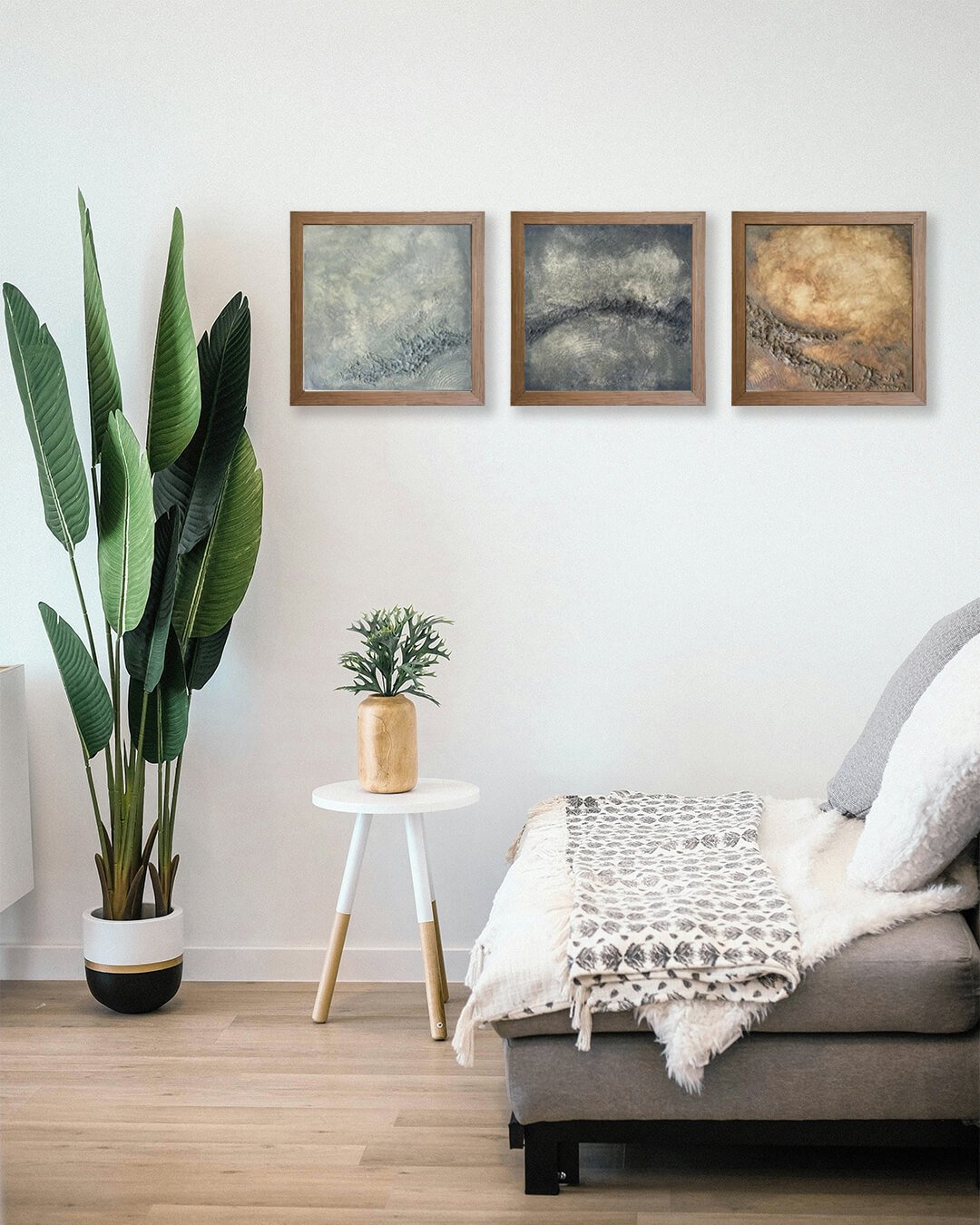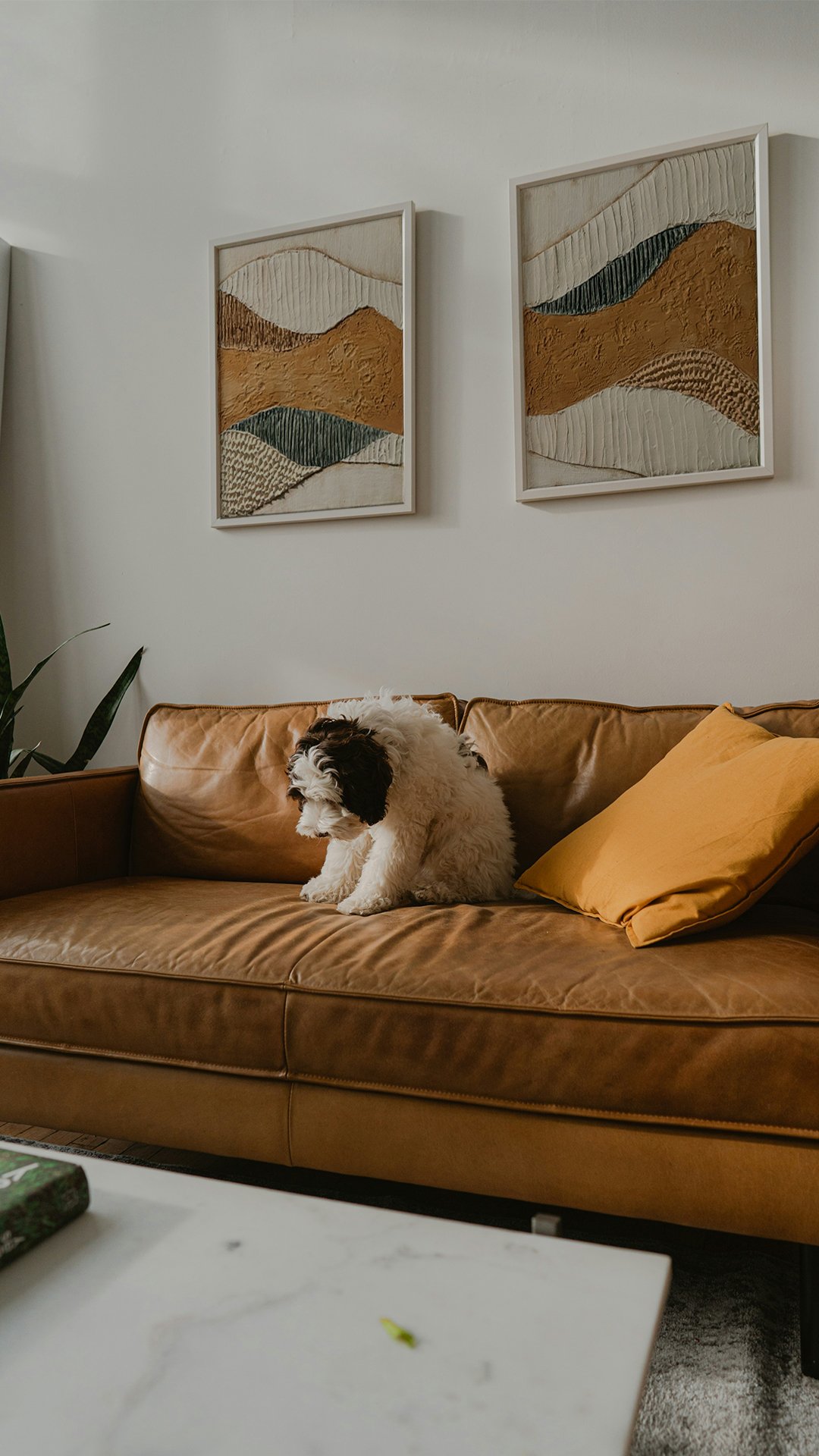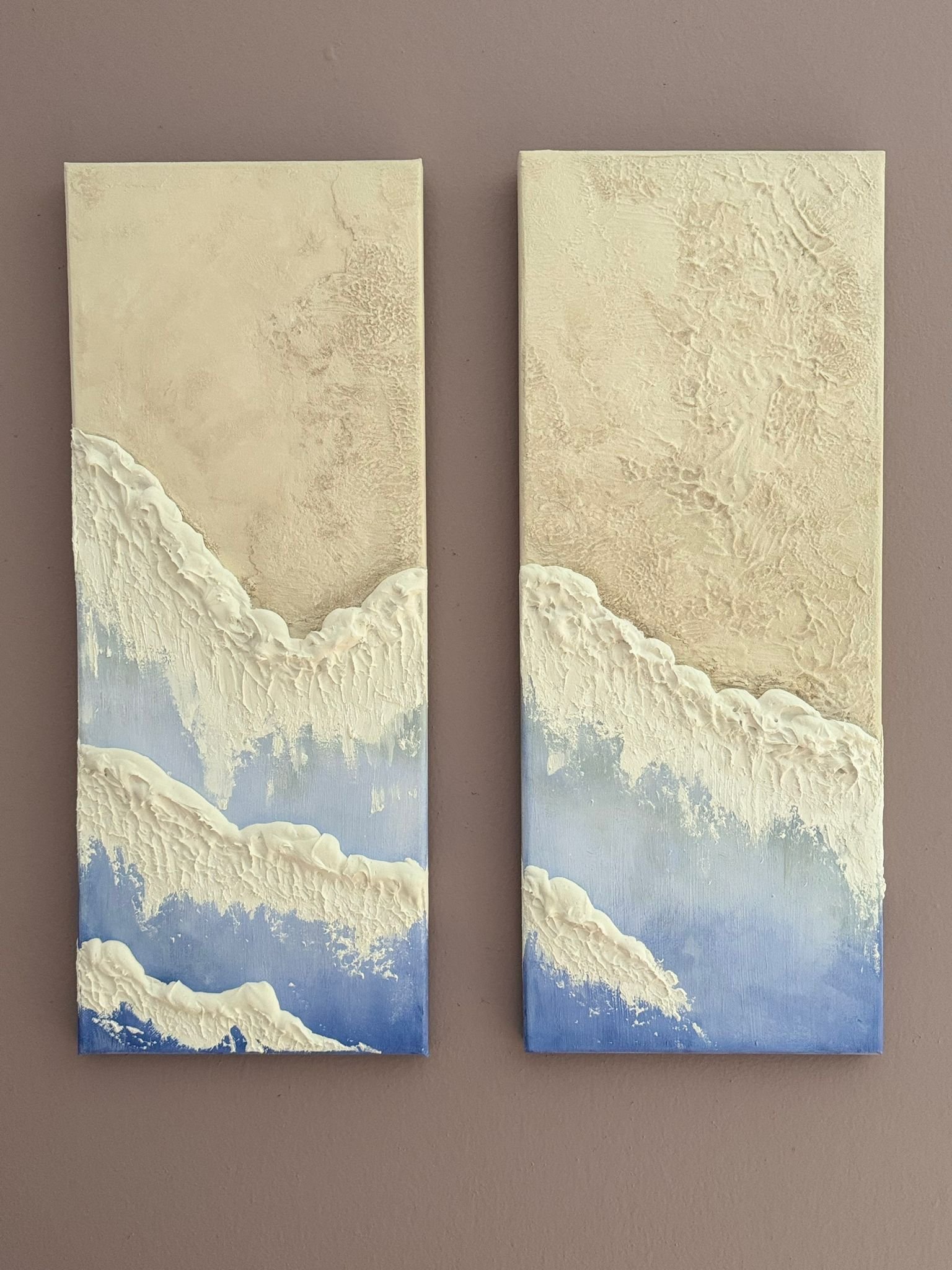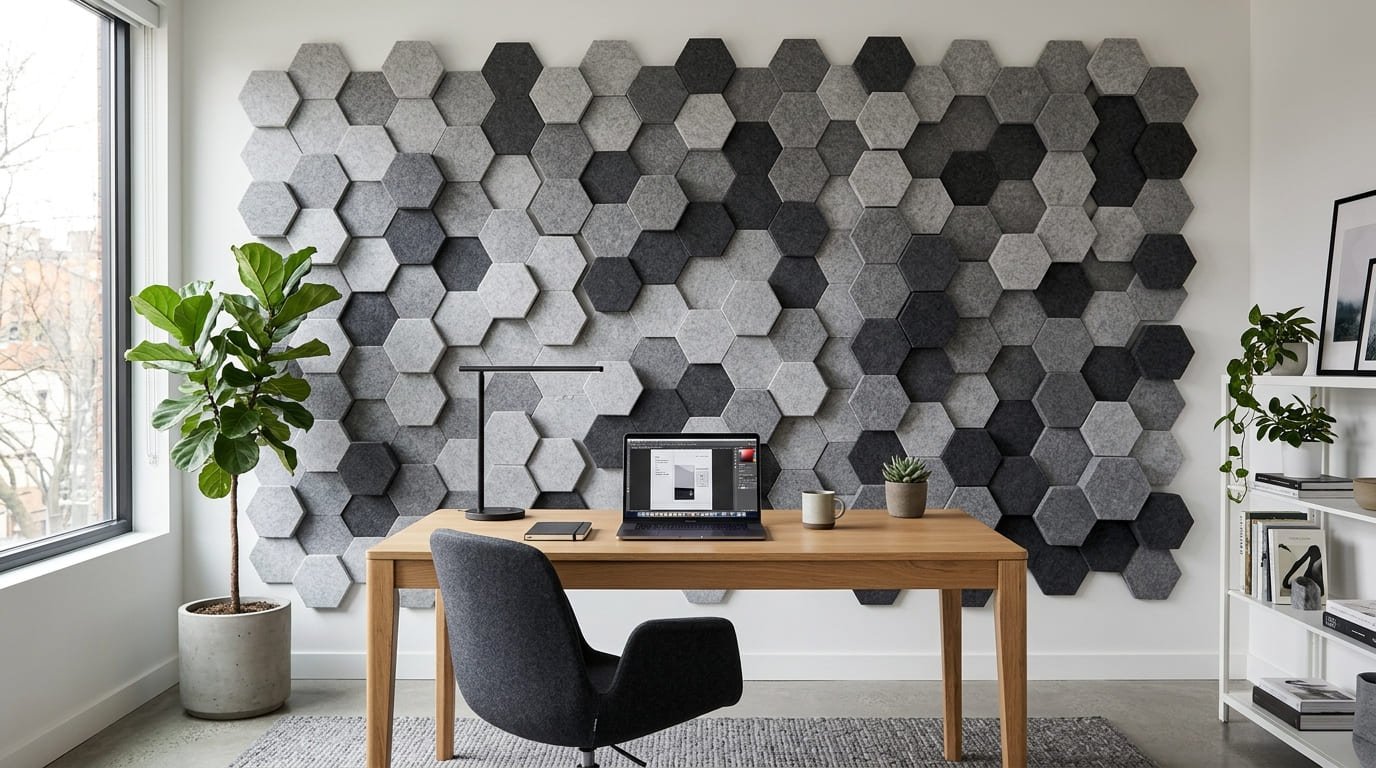
Textured wall art isn’t only a visual choice. The right piece can change the way a room sounds, feels, and breathes. If you’ve ever walked into a space and immediately felt calm, part of that had nothing to do with what you saw and everything to do with what you didn’t hear.
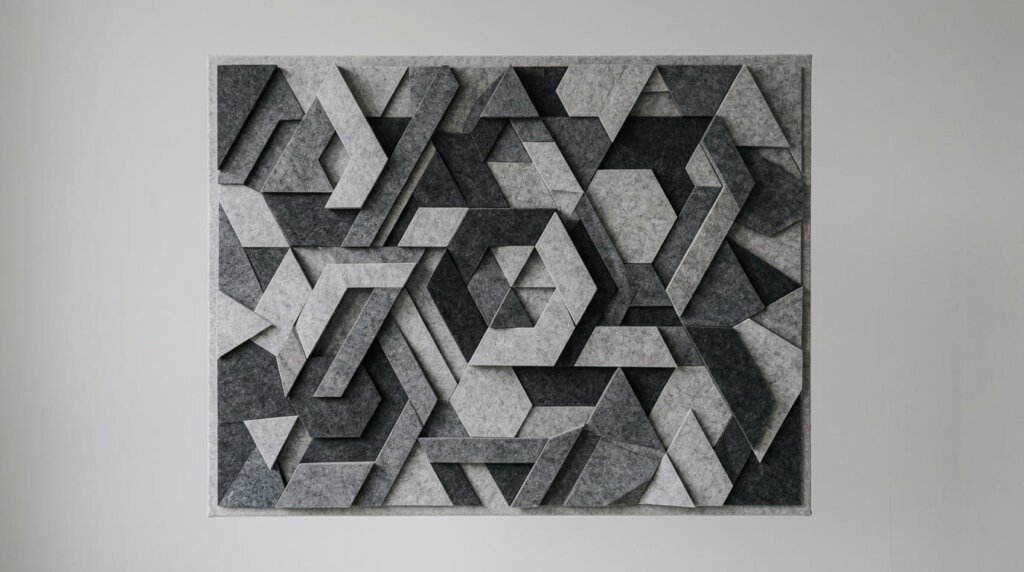
Here’s a quick breakdown before we go deeper: acoustic performance refers to how well a space manages sound. That includes how sound waves bounce, scatter, or get absorbed by the surfaces around them.
In most homes – especially those with open floor plans, high ceilings, hard flooring, and minimal furniture – sound waves bounce freely between walls, ceilings, and reflective surfaces like windows and glass. The result? Echoes and reverberation that make conversation feel loud, music feel muddy, and relaxation feel harder to reach.
Interior designers have known for decades that a room’s acoustics shape its emotional response. You can have the most beautiful space in the world, and if the sound is harsh, the room still feels off. This is why acoustic solutions have moved from recording studios and conference rooms into everyday living spaces.
Smooth drywall, polished tile, and bare concrete are efficient at one thing: reflecting sound. When sound hits a flat, hard surface, it bounces back almost unchanged. Layer that across multiple walls, and you get the kind of room where every voice echoes and every sound seems to multiply.
Textured surfaces work differently. Ridges, relief patterns, and raised areas break up the path of sound waves, causing scattering rather than a clean reflection. That scattering reduces the intensity of echoes and reverberation. It’s the same principle behind why a room full of bookshelves and soft furniture naturally feels quieter than an empty one.

This is where the visual and the functional meet in a genuinely interesting way. Wall art affect on acoustics depends on two main things: the material it’s made from and its surface geometry.
Flat canvas prints, much like bare drywall, do very little for sound. They’re smooth and non-porous, which means they reflect more than they absorb. But once you introduce depth – raised ridges, layered plaster effects, woven fabric surfaces, or dimensional sculptural forms – the dynamic changes.
When sound hits a textured surface, the uneven geometry causes it to scatter in multiple directions rather than returning at the same angle it arrived. Sound-absorbing materials go one step further: porous cores made from mineral wool, acoustic foam, or dense fibrous layers actually trap sound energy and convert it to a small amount of heat, reducing what returns to the room entirely.
The result is improved acoustics without any visible hardware, foam panels, or utilitarian solutions that feel clinical.
Not every textured piece delivers the same acoustic benefit. Here’s what makes the difference:
Porous and fibrous surfaces: Materials like fabric-wrapped panels, woven fiber art, or soft-core canvases absorb mid and high-frequency sounds most effectively. These are ideal for living rooms and bedrooms where reducing ambient chatter and improve sound quality is the goal.
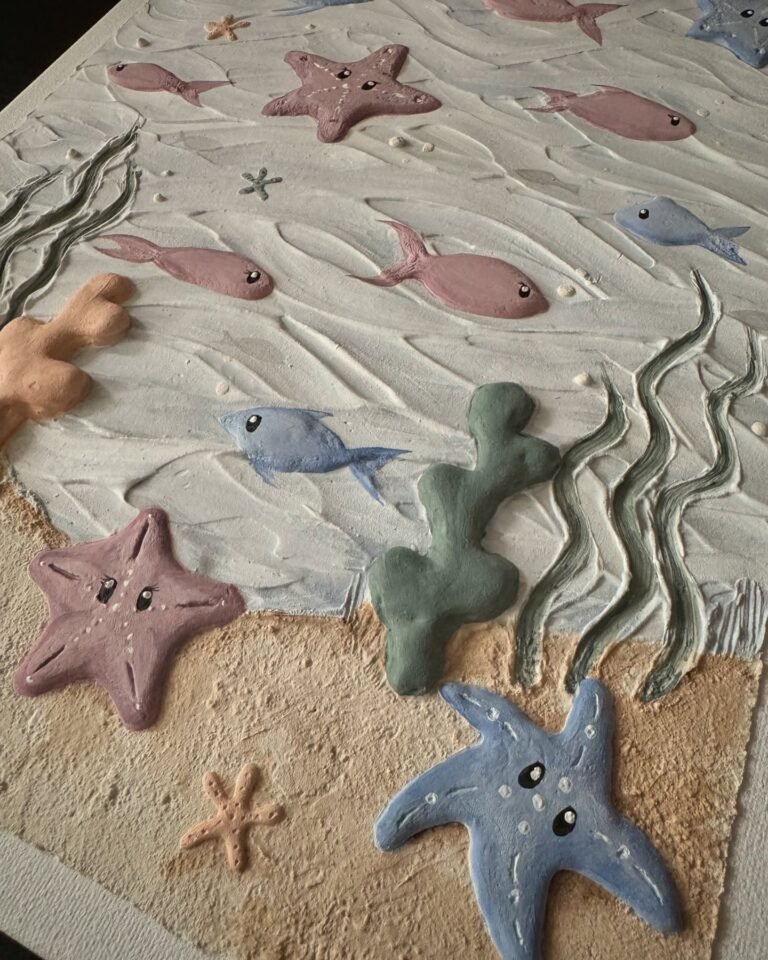
Raised or sculptural surfaces: Deep relief work in plaster, clay, or layered mediums creates geometric variation that diffuses sound across a wider area. This kind of surface texture works well in open-plan spaces or home theaters where sound reflection is most intense.
Layered mixed-media pieces: Abstract wall art with multiple materials – sand, gesso, natural fibers, and paint – can create a surface area that interrupts sound at several frequencies simultaneously. These are among the most visually rich and acoustically active options available.
There’s a reason interior designers keep coming back to texture. It adds visual depth, creates contrast between light and shadow, and makes a space feel layered rather than flat. But depth also does something quieter (literally): it helps anchor a room acoustically.
Think about the difference between walking into a hotel room with bare white walls and walking into one with natural linen wall panels, a large tactile art piece over the bed, and organic cotton textiles. The second room feels warmer, more serene, and quieter – even if the actual noise levels outside are identical. That sense of calm comes from the visual and emotional signals the space is sending, and texture is central to both.
In modern interiors, this has pushed the rise of what we’d call high-performing acoustic art installations: pieces designed to evoke beauty while managing the room’s sound environment at the same time. The best ones don’t look like acoustic panels at all. They look like something a collector would hang in their home.
Surface texture isn’t only a physical property. It has a direct effect on how we perceive a space emotionally. Rough, layered, nature-inspired surfaces tend to evoke warmth and organic familiarity. Smooth, cold surfaces evoke a clinical distance. That emotional response is documented in environmental psychology research, and it’s something thoughtful interior designers use intentionally.
A piece of abstract art with layered sand tones and subtle ridges doesn’t just create a sense of calm because it looks good. It creates it because the visual rhythm of its texture tells our nervous systems something: that this space has weight, depth, and intention. That it was made with care.
This is exactly why we think textured wall art works so much better than a flat print in most residential settings. The tactile quality – even when you’re only seeing it and not touching it – contributes to the overall ambiance of the room in a way that a smooth, two-dimensional image simply cannot.
Raed the Psychological Benefits of Textured Wall Art
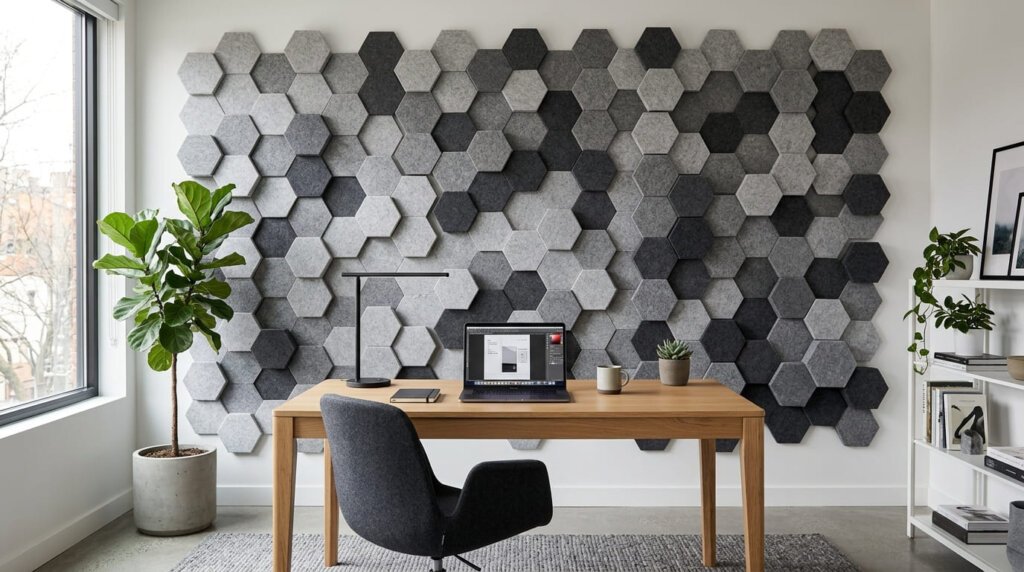
Strategic positioning matters. Acoustic wall art works best when it’s placed on the wall or walls where sound reflection is most problematic. Here’s a room-by-room look.
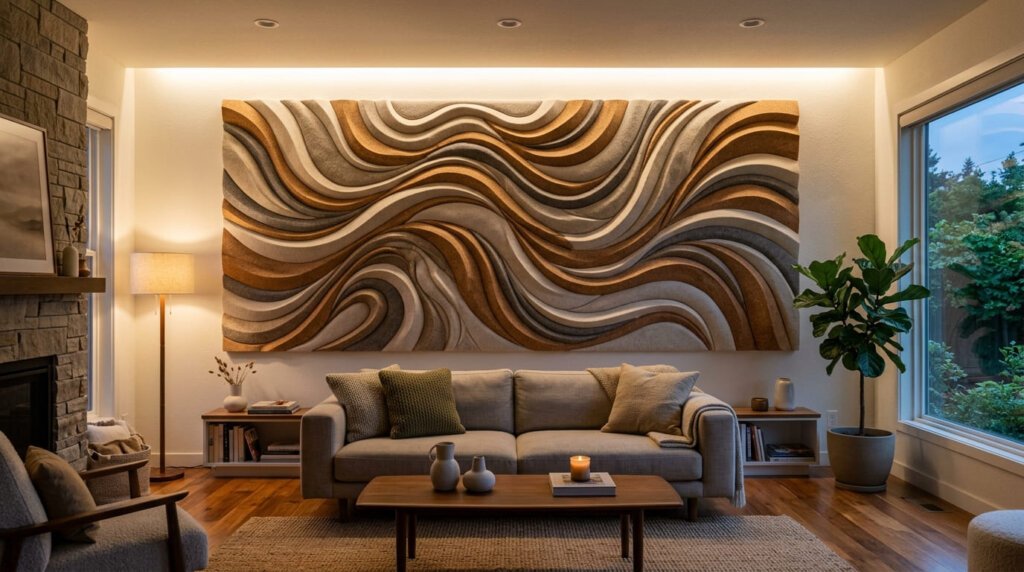
Living rooms are probably the space where acoustic comfort matters most in day-to-day life. Open layouts mean sound travels freely. A large textured piece – or a layered arrangement of several smaller ones – placed opposite the main seating area can significantly reduce echo while acting as the room’s focal point.
For living rooms with hard flooring and large windows, we recommend pieces with porous or fibrous surfaces in neutral palettes. Something with organic tones, natural fiber inclusions, or layered plaster effects will integrate seamlessly into the space without drawing visual attention away from the architecture.
Bedrooms need sound-absorbing solutions more than people realize. Sound transmission between rooms, street noise, and the general hum of urban living all reduce sleep quality. In a bedroom, a large acoustic piece above the headboard does double duty: it creates a visual focal point and provides a layer of acoustic comfort that a standard headboard or bare wall cannot.
Nature-inspired pieces with soft, warm tones work especially well here. The goal is to create a sense of serenity, and every element in the room should contribute to that.
This is where acoustic performance becomes a practical necessity rather than a design preference. Background echo during calls, sound reflection off hard surfaces, and improve focus issues caused by ambient noise are real productivity problems. Acoustic wall art in a home office or conference rooms setting improves sound quality on calls and reduces listener fatigue significantly.
In creative spaces and home offices, we find that people are more open to interesting, statement-making pieces than they might be elsewhere. A bold, large-scale abstract art piece with deep surface geometry can serve as both a visual anchor and a functional noise reduction tool.
Home theaters are obvious candidates for sound-absorbing materials, and acoustic art fits naturally into that setting. But open-plan kitchens connected to living areas are often overlooked. The combination of hard floors, appliances, and reflective surfaces in those spaces makes unwanted noise a constant presence. A few well-placed textured pieces on the kitchen-adjacent wall can minimize noise spillover and make the entire open area feel more livable.
Here’s a simple process to follow when selecting art pieces for acoustic performance.
Step 1: Identify the problem areas. Stand in the room and clap once. A sharp, long echo indicates highly reflective surfaces that need acoustic treatment. Note which walls are bare and which surfaces (windows, tile, drywall) are contributing to the problem.
Step 2: Assess the wall size and coverage needed. Larger surface area coverage means more acoustic impact. A single large piece is usually more effective acoustically than several small ones spread across the room. That said, an arrangement of medium pieces can work well on a longer wall.
Step 3: Choose the right surface texture. If noise reduction is the priority, look for pieces with porous or fibrous elements, sound-absorbing cores, or deeply layered surfaces. If visual depth is the priority and the acoustic issue is mild, raised relief work or dimensional plaster-style art delivers excellent results.
Step 4: Consider the material. Fabric-faced panels, natural fiber compositions, and layered organic materials all perform well acoustically. Sealed, heavily lacquered surfaces or very smooth canvases will add visual depth without significant acoustic benefit.
Step 5: Think about placement and wall decor context. The best acoustic solutions are placed on the primary reflective wall – often the one most directly opposite windows or the room’s main seating area. A single large piece placed as a focal point is often more effective than scattered smaller works.
Yes – but not in the way you might think. Style doesn’t affect acoustic performance directly, but it determines whether the solution integrates naturally into the room or reads as an afterthought.
We personally love nature-inspired work for residential settings: pieces with organic forms, sand and stone tones, layered plaster effects, and minimal color contrast. These pieces tend to work well in neutral palettes because they add visual rhythm and tactile interest without competing with the room’s other elements.
Abstract art with dimensional surfaces is particularly strong in modern interiors. A piece that references flowing water, eroded stone, or wind-shaped sand dunes can evoke a sense of being connected to the natural world – which matters more to the mood of a room than most people expect.
What we’d steer away from: pieces with highly sealed, glossy surfaces marketed as wall art that don’t have any actual raised or porous texture. These might look beautiful, but they’ll behave acoustically like a flat wall – contributing nothing to sound management and potentially even adding a small reflective surface.
If you’re interested in exploring pieces that are both visually considered and acoustically active, DIY Textured Canvas Art Ideas for Wall Design is a great place to see how layered surfaces are built up and why they look so much richer in person. And if you’re thinking about building your own pieces to complement or match your existing decor, DIY Textured Canvas Wall Art with Drywall Mud walks through the process step by step.
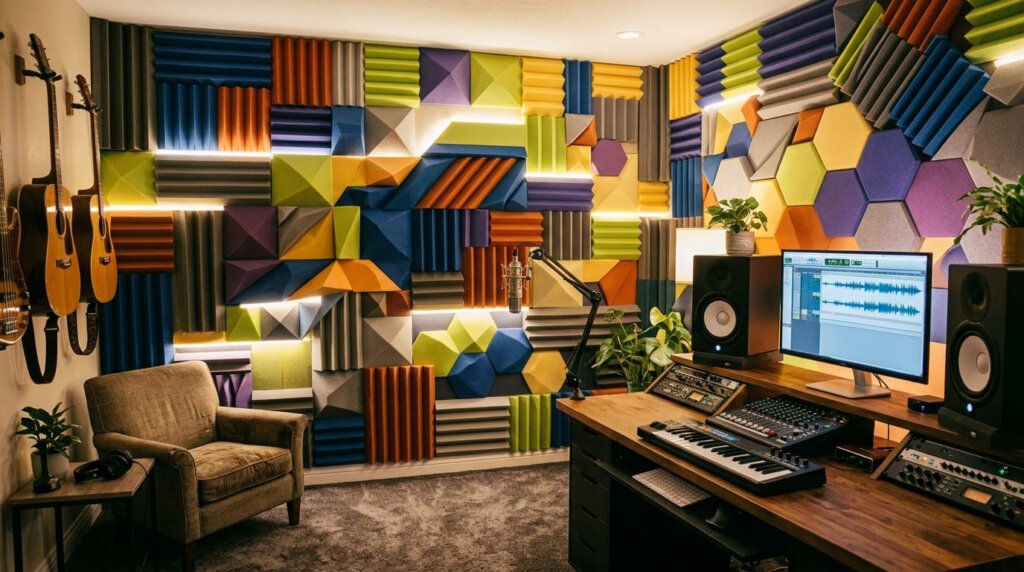
Standard acoustic panels are engineered specifically for sound absorption and are common in recording studios and conference rooms. They’re highly effective, but they tend to look clinical – foam wedges, fabric-covered rectangles, and wall-mounted squares that solve the problem but don’t add anything visually.
Acoustic wall art is designed to do both. The functional core is similar: sound-absorbing materials, carefully layered, beneath an artistically finished surface. But the outer result looks like something you’d see in a gallery rather than a studio. The difference is that acoustic wall art integrates into the room’s visual identity rather than announcing itself as a technical solution.
For purely residential settings, acoustic wall art is almost always the better choice. It allows you to soundproof (partially, not entirely – it’s worth being clear about that) while maintaining the integrity of your interior design. For spaces that need high-level sound management – recording studios, home theaters with serious audio setups, commercial conference rooms – standard acoustic panels remain more effective for deep sound absorption.
The best real-world approach is often a combination: anchor the room with one or two large acoustic art installations as the primary visual statement, then supplement with softer furnishings and materials to layer additional sound-absorbing coverage throughout.
Not completely, no. Textured wall art – including pieces with sound-absorbing cores – reduces echo, reverberation, and high-frequency reflections significantly. It doesn’t block sound transmission between rooms the way mass-loaded barriers or dense drywall construction does. Think of it as acoustic comfort rather than full soundproofing.
There’s no single rule, but interior designers generally recommend treating at least 15–25% of a room’s wall surface with sound-absorbing material for a perceptible improvement. A single large piece in a small bedroom or home office can achieve this easily. A larger living room might need multiple pieces or a combination of art and soft furnishings.
Color alone doesn’t change acoustic behavior. What matters is the surface structure and the material beneath the surface. A deeply textured piece in white performs the same as one in terracotta if the underlying structure is the same.
Pieces with true sound-absorbing cores – using mineral wool, acoustic foam, or similar materials – tend to carry a higher price point than decorative-only art. However, the overlap between high-quality textured wall art and acoustic performance has grown considerably. Many pieces that are crafted with dimensional surfaces, layered materials, and organic finishes deliver meaningful acoustic benefit without being marketed as acoustic products – and without the premium acoustic price tag.
Living rooms, bedrooms, home offices, and home theaters benefit most. Conference rooms, creative spaces, and open-plan living areas with hard surfaces are also strong candidates. Essentially, any room with a lot of reflective surfaces – glass, tile, bare concrete, or open drywall – will respond well to the addition of textured, porous, or fibrous wall surfaces.
Look for pieces that have real surface depth – ridges, raised elements, or layered materials you can see clearly. Ask whether the piece has a porous or absorptive core. Smooth canvases with a thin layer of texture paint will add some visual depth but won’t perform acoustically the way a truly dimensional, layered piece will. If you want guaranteed acoustic performance, look specifically for art marketed with an NRC (Noise Reduction Coefficient) rating.
The relationship between texture, sound, and the way a space feels is one of those things that’s hard to explain until you experience it. A room with thoughtfully placed, deeply textured wall art just feels different. Quieter. Warmer. More considered.
We think about this a lot when we put together collections at My Home Art & Decor. Every piece we select is chosen with the full room in mind – not just how it looks on a blank wall, but how it contributes to the feeling of the space it lives in. Sound is a part of that, even if it’s not always the first thing people think about.
If you’re building out a room and want to explore what that looks like in practice, explore our full collection of textured wall art here – or start with our Neutral Textured Wall Art collection if you’re working with a soft, organic palette.





Sign up to grab 10% off your first order and be the first to hear about new drops and exclusive deals!