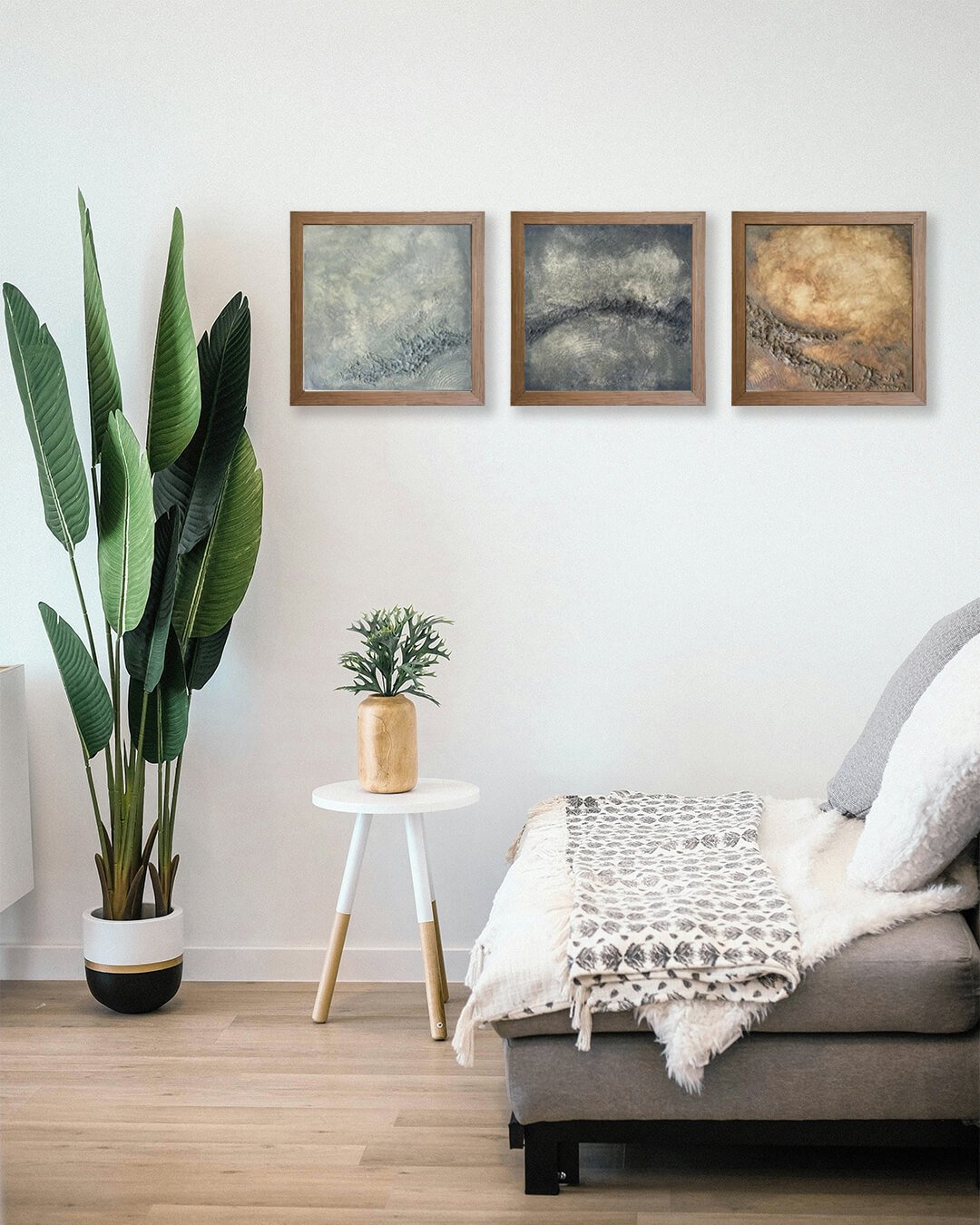
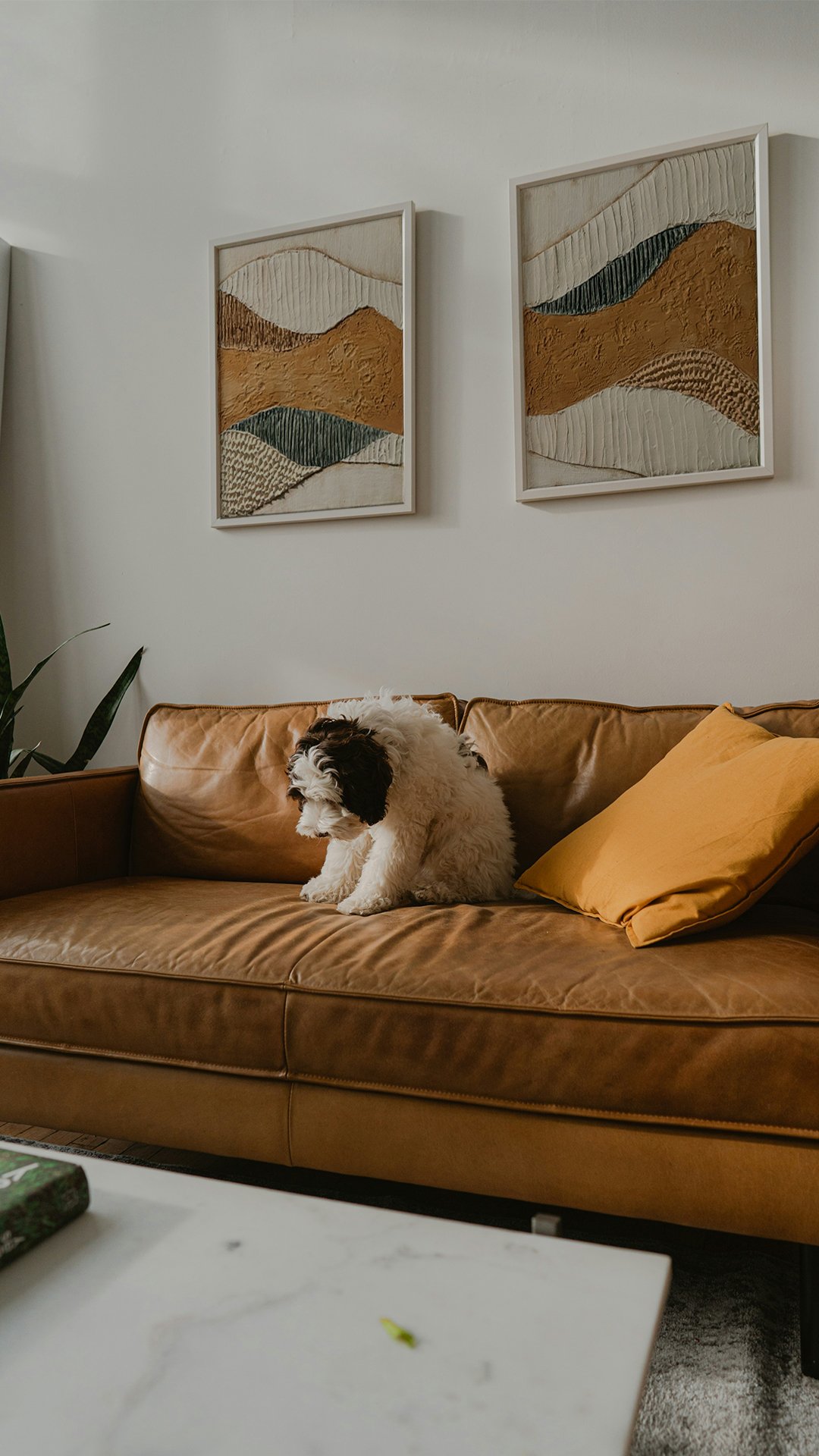
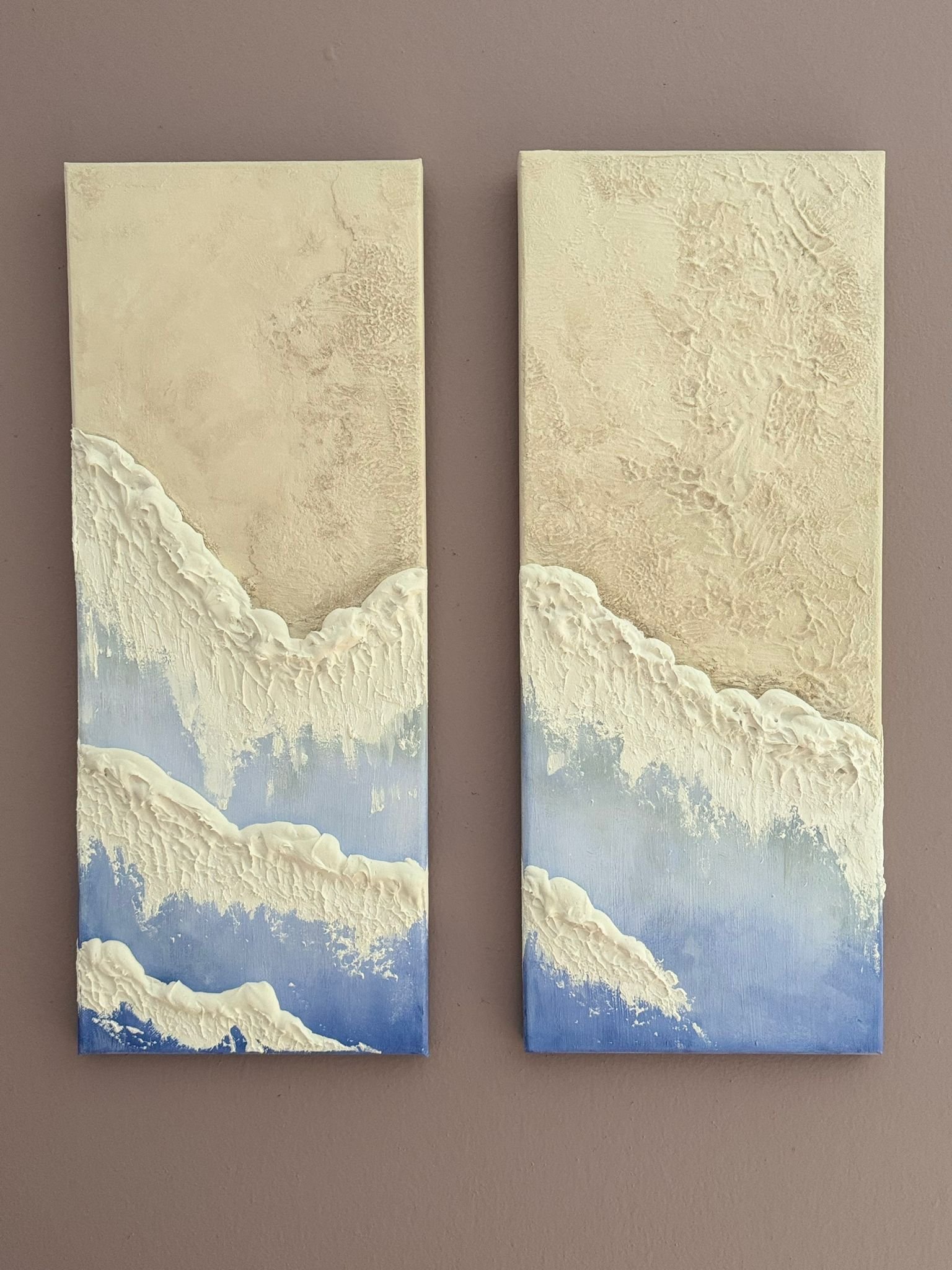
Textured art works across interior design styles because it adds a physical, tactile quality that flat prints simply cannot replicate. Whether your home leans toward quiet Japandi minimalism, the raw authenticity of Wabi-Sabi, or the light-filled ease of Coastal Modern, the right textured piece pulls the room together in a way that feels intentional. Here, we break down exactly how to match art in interior design to the style you already love.
Key Points / Quick Summary
Art in interior design is not decoration placed after the fact. It is one of the primary tools that shapes the mood, scale, and personality of a room. A well-selected artwork can transform spaces that feel generic into something that resonates – something that feels like the person who lives there actually lives there.
When we talk about art here, we are not limiting the conversation to paintings in frames. We mean textured canvas panels, plaster reliefs, mixed media wall sculpture, woven fiber pieces, and three-dimensional works that add visual and tactile weight to a wall. These are the kinds of pieces that make guests stop walking and actually look.
The reason this matters for interior design is simple: flat spaces need contrast. A beautifully decorated living room with smooth furniture, a neutral rug, and soft lighting can still feel incomplete without something on the walls that adds depth. Incorporating art with surface variation – something raised, brushed, or layered – introduces a dimension that makes the overall aesthetic feel finished and considered.
What we see happening right now, across design publications and real homes alike, is a shift away from mass-produced prints toward art that has character. People are looking for pieces that evoke something real, whether that is the feeling of stone, sand, bark, or water.
Here is the short answer: texture catches light. A flat canvas does not change at all depending on the time of day or the angle of a lamp. A textured surface does. In the morning, the ridges and impasto layers in a plaster canvas art piece cast soft shadows that shift as the light moves. In the evening, under warm artificial lighting, those same surfaces glow differently. That responsiveness is what gives textured art a living quality that other types of wall decoration do not have.
From a design perspective, texture also adds depth and interest without adding visual noise. A vibrant, highly detailed print can draw too much attention and compete with other elements in the room. A well-crafted textural piece, especially one in neutral or earthy tones, adds layers without demanding to be the loudest thing in the room. It draws the eye in gradually rather than all at once.

Japandi is a blend of Japanese minimalism and Scandinavian hygge, and it is one of the most influential design styles of the past few years. The style prioritizes functionality, natural materials, a muted color palette, and a sense of calm that is built through restraint rather than emptiness. As Artera Home explains, Japandi design “prioritizes minimalism, clean lines, and uncluttered spaces while maintaining warmth through natural materials like wood, bamboo, and linen.”
In Japandi interiors, art is not used to fill walls. It is used with intention. One well-chosen piece in the right place does more than a dozen smaller ones scattered around.
For a Japandi space, you want textured art that feels restrained but not cold. Think plaster canvases in warm off-white, sand, or pale clay tones. Natural fiber relief pieces work beautifully here as well. The surface should have quiet variation – something that rewards a closer look – but the overall impression should be calm.
Avoid anything with strong color contrast or chaotic patterning. In a Japandi living room, a large-scale piece in creamy plaster with subtle ridgework will seamlessly integrate into the space without disrupting its stillness. The piece becomes part of the architecture of the wall rather than something applied on top.
The scale matters too. One large statement canvas above a low sofa or a console table creates the kind of balanced look Japandi design is known for. Negative space around the piece is part of the composition. Do not fill every surface.

Wabi-Sabi is a Japanese philosophy that embraces impermanence, imperfection, and authenticity. In home decor, this translates to an appreciation for handmade pieces, natural aging, organic forms, and the visible trace of human hands. As Savy Canvas noted in a recent design roundup, 2026 is seeing a significant rise in demand for art that “feels real, grounded, and organic,” and Wabi-Sabi is leading that trend.
What makes Wabi-Sabi the most natural fit for textured art of any interior design style is this: the beauty of the style is literally in the imperfect surface. A plaster piece with uneven ridges, a canvas with visible brush marks, or a mixed media work that shows its materials openly – these are not flaws in the Wabi-Sabi context. They are the point.
Start with materials that evoke nature. Plaster, clay, sand-mixed mediums, natural pigments, and rough linen or canvas bases all resonate deeply with the Wabi-Sabi aesthetic. The hue palette should stay in earthy ranges: warm grays, weathered whites, ochre, dusty rose, aged terracotta.
Next, look for asymmetry. A piece that is perfectly centered and symmetrical works against the Wabi-Sabi principle. Favor art that feels slightly irregular – where the mark-making is visible and the composition breathes.
Finally, consider scale in relation to your furniture and decor. A large, sculptural piece above a handmade ceramic bowl on a natural wood shelf creates the kind of layered, intentional simplicity that defines this style. The art piece does not need to be elaborate. It needs to feel genuine.
A great place to start exploring this kind of textured work is our Neutral Textured Wall Art Collection, which includes handcrafted plaster canvases in earthy, organic palettes that work naturally in Wabi-Sabi inspired rooms.

Coastal Modern is the evolution of traditional beach house decor. Where older coastal style leaned heavily on nautical props and pastel blue everything, Coastal Modern takes those same sea-inspired references and filters them through a cleaner, more sophisticated lens.
Lighting is everything in Coastal Modern spaces. These interiors are built around natural light, pale backgrounds, and the kind of easy layering that makes a room feel like it took zero effort even though it clearly did.
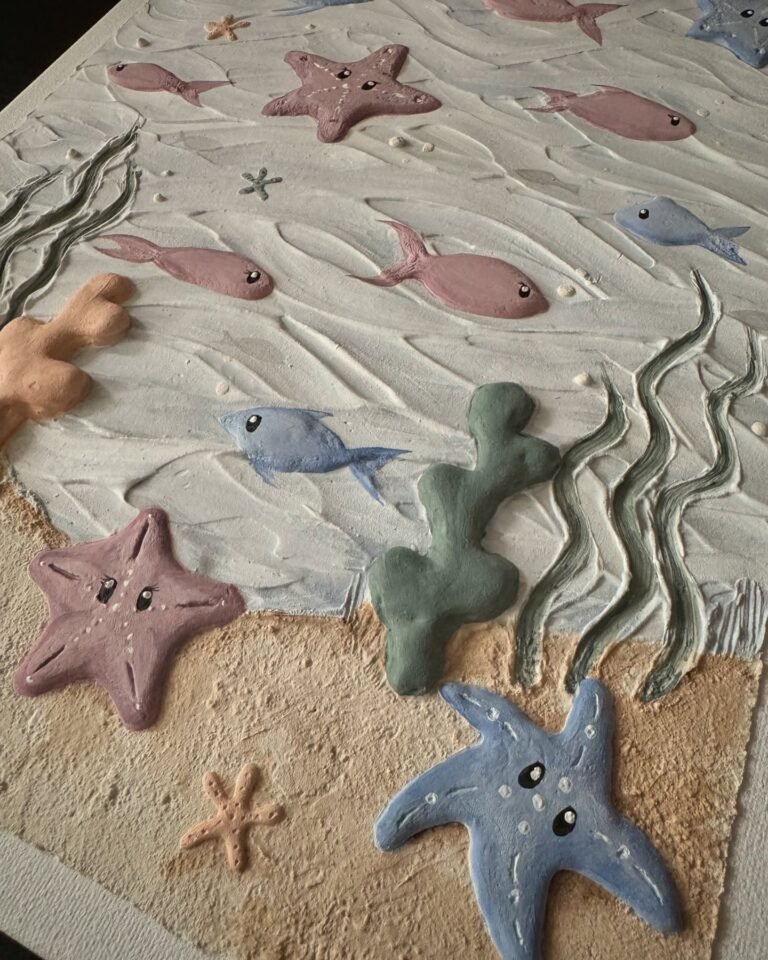
Textural pieces are a core tool here. The right artwork does not just look coastal – it feels coastal. The ripple of a plaster surface, the layered application of sandy, muted pigments, a relief piece that suggests the movement of water without being literal about it – these are the kinds of textured art choices that blend into a Coastal Modern room without shouting.
The palette is your first guide. For Coastal Modern, you want blues, sandy beiges, driftwood grays, and soft sage greens.
A large-scale piece – say, a 30×40 abstract coastal canvas in layered blues and warm white plaster – works especially well as a focal point above a sofa or on the main wall of an open-plan living room. If the room has large windows or sliding doors, the piece will catch changing natural light throughout the day and the visual experience will shift in a way that feels organic and alive.
For a gallery wall in a Coastal Modern space, the trick is to keep the frames consistent (natural wood, thin white, or matte black all work) while varying the surface qualities of the pieces. Mix a smooth photographic print with a deeply textural plaster canvas and maybe a small sculptural woven piece. That contrast is what creates depth and interest rather than a flat, predictable wall.
Our Coastal Wall Art Collection is specifically designed with these layered, sea-inspired palettes in mind – pieces that feel expressive without being literal.

Bohemian and eclectic interiors have the most creative freedom of any design style, but that does not mean anything goes. What separates a visually rich bohemian room from a chaotic one is intentional layering.
In bohemian interiors, textured art has room to be vibrant, playful, and expressive. Sculptural wall hangings, mixed media pieces that combine paint with natural fibers, bold plaster reliefs in deep earth tones – all of these fit. The juxtaposition of different art styles and materials is part of the visual language.
Think of the walls as a layered conversation between different art pieces and decoration elements. Start with one anchor piece – ideally a large, textural canvas in a tone that pulls from the room’s existing palette. Then build around it with smaller pieces of different types: a small woven sculpture, a ceramic relief, a flat print, a framed botanical study.
The key in bohemian styling is that nothing should feel too precious or too carefully arranged. Groupings work better than isolated, single pieces spaced far apart. And if you are incorporating different art styles – say, an abstract plaster canvas next to a graphic print – keep at least one color that appears in both. That one shared hue will hold the composition together visually.
An expansive gallery wall in a bohemian living room is one of the most rewarding decorating projects you can take on. It lets you showcase your personal style, tell a visual story, and create a room feel that is entirely your own.
If you enjoy hands-on projects, our blog Easy DIY Canvas Art Ideas: Paint Your Own covers fun starting points for creating your own canvases to blend into a gallery wall.

Minimalist design is often misunderstood as “empty.” It is not empty – it is edited. Every piece of furniture and decor has been chosen deliberately, and nothing occupies space without a reason. In that context, art in interior design carries even more responsibility. A single artwork in a minimalist room is doing a lot of communicative work.
The trend in minimalist interiors right now is what some designers are calling “warm minimalism” – keeping the clean lines but replacing the cold white-and-steel palette with natural materials, softer tones, and tactile surfaces. Textured art is central to that shift.
One piece. That is usually the answer. In a minimalist interior, trying to curate a gallery wall risks feeling too busy. Instead, select one large-scale piece and give it the space it deserves. The negative space around it is intentional and important – it lets the eye rest and gives the artwork room to breathe.
For the piece itself, a minimalist textured canvas works best when it has a quiet complexity. Something with subtle surface variation rather than bold, dramatic marks. A plaster canvas in warm white with gentle ridge work, or a soft abstract piece in two closely related tones, will add depth without breaking the room’s silence.
Strategically, this kind of artwork works best on the largest uninterrupted wall in the room – usually behind the sofa, above the bed, or on the wall you see first when you walk in. The lighting should accent it. Even a single well-placed picture light or directional LED strip pointed at the canvas will dramatically enhance how the textural surface reads.
If you are working with a truly minimal palette – white walls, natural wood, clean furniture and decor lines – the art becomes the accent. It draws attention and anchors the room without overwhelming it. See our Minimalist Textured Wall Art Collection for pieces that were designed with exactly this kind of space in mind.
This is a process we use when helping customers find pieces that actually work in their homes. It is not complicated, but it does require thinking through a few things in the right order.
Step 1: Identify your dominant design style (or your two closest ones) Most rooms are not pure versions of one style. They are a blend of two or three influences. Knowing that your room is primarily Japandi with some Wabi-Sabi warmth, for example, gives you a clear set of parameters to work within.
Step 2: Nail down your color palette before looking at art Art should complement the room, not be chosen first and then forced to fit. Write down the three to five dominant colors in your space – walls, sofa, rug, furniture. Any artwork you select should either match at least one of those tones or provide a deliberate and intentional contrast.
Step 3: Decide on scale Measure your wall. A canvas that is too small for the wall behind it will look timid. As a general rule, the artwork should occupy 60 to 75% of the width of the furniture it hangs above. For a large sofa in a living room, that usually means looking at pieces that are at least 40 inches wide.
Step 4: Choose your texture type based on your style Plaster and clay-based surfaces work beautifully in Japandi, Wabi-Sabi, and Minimalist rooms. More expressive, layered mixed media works in Coastal Modern and Bohemian spaces. Sculptural relief pieces can work anywhere if the scale and color are right.
Step 5: Decide where it goes before you buy Think through the lighting. Is there a window nearby that will create natural light during the day? Is there a lamp or ceiling fixture that can be angled at the piece? Texture reads entirely differently under different lighting conditions, and the placement of your art piece matters as much as the piece itself.
Step 6: Live with it before committing to surrounding pieces If you are building a gallery wall or adding more pieces, hang the anchor piece first and live with it for a few weeks. See how it changes in different lighting, how it feels in the morning versus the evening, and how the room shifts around it. Then add additional art pieces to complement it.

These are the practical details that make a real difference between a wall that looks styled and one that looks unfinished.
Height: Hang artwork so the center of the piece sits at approximately eye level, which for most people is around 57 to 60 inches from the floor. In a room where people are usually seated – like a living room – this can come down a few inches.
Spacing in a group: When hanging multiple pieces together, keep the gap between frames consistent. Two to four inches between pieces is a common standard, though this can vary depending on the overall aesthetic. In bohemian and eclectic rooms, a slightly irregular arrangement can look intentional.
Layering: Do not limit yourself to wall-mounted art. A large canvas leaned against a wall on a console table, layered in front of a smaller framed piece, creates a casual, lived-in depth that is very effective in Coastal Modern and Bohemian rooms.
Proportion: In a room with high ceilings, do not be afraid of a very large piece. An expansive canvas in a room with a 10-foot ceiling will look commanding and right. That same piece in a room with standard 8-foot ceilings might overwhelm the space. Scale down accordingly.
This is one of the most underappreciated aspects of incorporating art into a home. Texture is essentially a light-catching surface. The direction of the light source determines which parts of the surface are highlighted and which fall into shadow – and that changes the entire character of the piece.
Direct front lighting flattens texture. If the light source is directly in front of the canvas, you lose a lot of the surface dimension. Angled lighting – from above, the side, or diagonally – creates the shadow variation that makes textural artwork come alive.
Natural lighting changes throughout the day and the effect on textured art is genuinely beautiful. A plaster piece in warm tones hit by morning light from the east will look different in afternoon light, and different again under warm incandescent evening lighting. That variation is what makes textured pieces feel dynamic and alive rather than static.
For this reason, we always recommend considering the light in your room before selecting a piece. If you have great natural light, a subtler piece with gentle ridge work will show beautifully. If your space relies primarily on artificial lighting, a more dramatically textured surface will reward the added shadow and depth that a well-placed lamp can create.
This comes down to your design style and the size of your wall. Here is a quick way to think about it:
Choose a single statement piece if:
Choose a gallery wall if:
The gallery wall approach works especially well when you have a mix of types: one or two textured canvas pieces as anchors, supplemented by flat prints, small sculptures, ceramic wall objects, and maybe a mirror. That variety of surface quality and dimension creates a viewing experience that changes depending on where you stand and how the light falls.
Q: Can textured wall art work in a small room?
A: Yes, absolutely – in fact, it can make a small room feel more interesting without adding visual clutter. The key is scale. In a small room, one medium-sized textural piece in a light, neutral tone will add depth and interest without making the walls feel like they are closing in. Avoid very dark or very complex surfaces in small spaces.
Q: How do I know if a piece of art will match my existing furniture and decor?
A: Pull the dominant colors from your furniture, rug, and wall color. Any art piece that shares at least one of those tones will integrate naturally. A second option is to choose a piece that is in a completely neutral palette – warm whites, soft sand, pale gray – which will complement almost any interior design scheme without competing with it.
Q: Is it okay to mix different art styles in one room?
A: Yes, blending different styles is a completely valid approach, especially in eclectic or Coastal Modern rooms. The thing that holds a mixed collection together is a cohesive color story and intentional spacing. Blending art styles works best when you have one dominant style and use the others as accents. If everything is equally loud, nothing stands out.
Q: What is the difference between textured art and sculptural art?
A: Textured art refers to two-dimensional work – typically canvas or board-mounted – where the surface has three-dimensional variation. Sculptural art is fully three-dimensional and freestanding or mounted to the wall as a sculptural object. Both can serve as focal points in interior design, but they work in slightly different ways. Textured canvas art is generally more versatile across design styles; a sculpture tends to have a stronger decorative presence and works best when it has clear space around it.
Q: How do I choose between a large single artwork and a gallery wall?
A: Think about how you want the room to feel. A single, large-scale piece creates a calm, anchored focal point – ideal for minimalist and Japandi rooms. A gallery wall creates energy and visual interest across a larger surface – better for bohemian and eclectic spaces. Both approaches can work in Coastal Modern rooms depending on the size of the wall.
Q: Does textured art require special care or cleaning?
A: Most plaster and mixed media canvas pieces can be lightly dusted with a dry, soft brush or a microfiber cloth. Avoid moisture and direct sunlight exposure, both of which can affect the surface over time. If a piece has very deep relief, use a small soft brush to get into the crevices. Most quality handcrafted pieces are sealed, which protects the surface from light dust and humidity.
Q: Can I incorporate textured art into a rental apartment?
A: Yes. Most canvas pieces can be hung with heavy-duty adhesive strips rated for the weight of the piece, avoiding the need to put holes in the walls. Leaning larger canvases against the wall – on a shelf, console, or directly on the floor – is also a completely acceptable and often stylish approach that works especially well in Wabi-Sabi and bohemian interiors.
Choosing art for your home is one of the most personal decisions in the whole process of decorating. There are real guidelines – scale, color, lighting, placement – but at the end, the art you live with every day should be something that genuinely resonates with you. Something that reflects the way you see your home and what you want to feel when you walk through the door.
Textured art specifically has a quality that grows on you over time. The way a plaster canvas looks at 7 in the morning with natural light is different from how it looks at 9 at night with a lamp pointed at it. That variability is part of what makes it a living element in your home rather than a static one.
If you are not sure where to start, begin with one piece. Pick a wall that matters to you – the one you see when you sit in your living room, the wall behind your desk, the first thing you see when you walk in. Find a piece that speaks to your personal style and fits the scale of the space. Then live with it. The rest will come.
We put together our entire collection with this kind of intention in mind – pieces inspired by nature, handcrafted, and designed to work across the design styles we’ve covered here. You can browse everything at My Home Art & Decor.
And if you are curious about creating your own art as a complement to pieces you already have – or as a starting point before investing in a statement piece – our blog on DIY Textured Canvas Art Ideas for Wall Design walks through practical methods for making textural wall art at home.




Sign up to grab 10% off your first order and be the first to hear about new drops and exclusive deals!